Mid-Summer Secrets for Clear, Calm Pond Water
Midsummer is when your pond shows its true colors. Warm water, bright sun, and hungry koi all hit at the same time, and your peaceful backyard sanctuary can either stay clear and calm or quickly turn cloudy and stressed. Smart pond maintenance right now keeps your water beautiful and your fish relaxed.
Here in Connecticut, July afternoons are warm, and evenings bring crickets and fireflies. A pond or pondless waterfall that feels like it has always belonged in the yard turns that scene into something special. At PD Waterscapes, we design ponds to feel like they were shaped by nature, but they are still living systems. Mid-summer care is when you fine-tune biological filtration, support your plants and fish, and let the sound and movement of water keep everything in balance.
Reading the Water in Mid-Summer
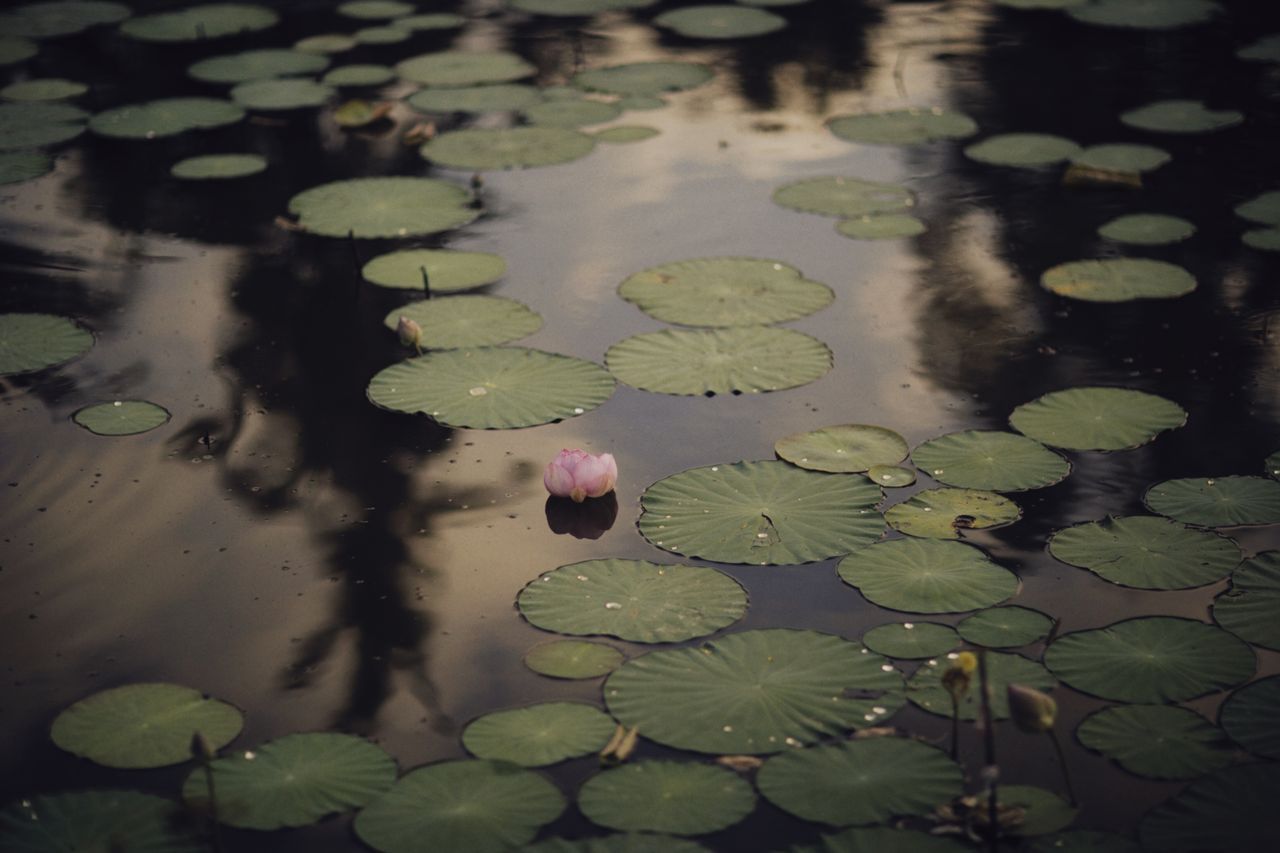
Your pond is always talking to you. Clear water with soft ripples and gentle reflections of sky and plants usually means the ecosystem is in good shape. Water that looks murky, has a green tint, grows string algae on rocks, or carries a strong odor is your early warning that the balance is slipping.
As water temperatures climb into the 70s and 80s Fahrenheit, oxygen levels naturally drop. At the same time, koi are more active and produce more waste. That is why mid-summer is when your waterfalls, streams, and circulation matter most. Moving water at the surface helps add oxygen and keeps fish from getting stressed.
We suggest simple five-minute checks a few times a week:
- Watch your fish: Are they gasping at the surface or hanging by the waterfall?
- Check the waterfall and stream: Is the flow strong and steady, or weaker than usual?
- Scan the surface and edges: Do you see dead leaves, decaying plant material, or thick algae?
- Listen to the water: Does the sound seem softer or different, which can signal a pump or flow issue?
Those quick habits help you spot small problems before they grow.
The Five Elements of a Healthy Koi Pond Ecosystem
A pond that looks like it was designed by nature still depends on a few key pieces working together. When all five are in balance, mid-summer pond maintenance feels simple instead of stressful.
1. Filtration and circulation
Mechanical filtration pulls out the visible debris. Skimmers collect leaves, pollen, and floating waste before they sink and break down. Biological filtration is quieter but just as important. Biofilters give helpful bacteria a place to live so they can turn fish waste into safer forms. In warm months, that biological filtration works overtime.
Strong circulation ties it all together. Pumps, waterfalls, and streams move water across the surface and through the filters. This.
- Keeps oxygen levels higher
- Prevents stagnant pockets
- Helps maintain clear water and calmer fish
2. Rocks, gravel, and bacteria
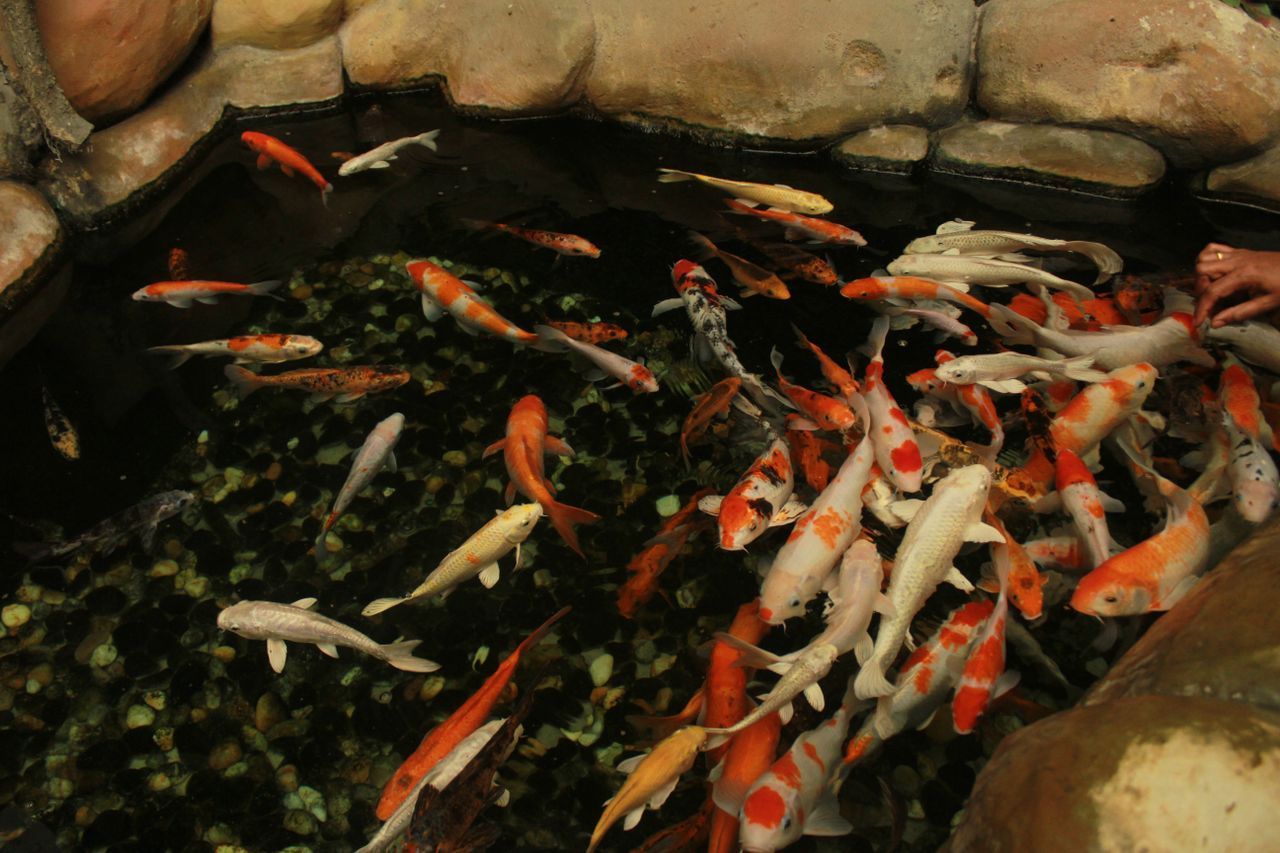
Natural stone is not just for looks. Rocks and gravel create huge amounts of surface area where beneficial bacteria can grow. These bacteria:
- Break down fish waste
- Process leftover fish food
- Help keep algae in check by removing extra nutrients
In mid-summer, supporting this biological filtration with regular bacteria treatments can make a big difference in clarity. The goal is not sterile water, but a living, breathing ecosystem that quietly cleans itself.
3. Plants and fish in balance
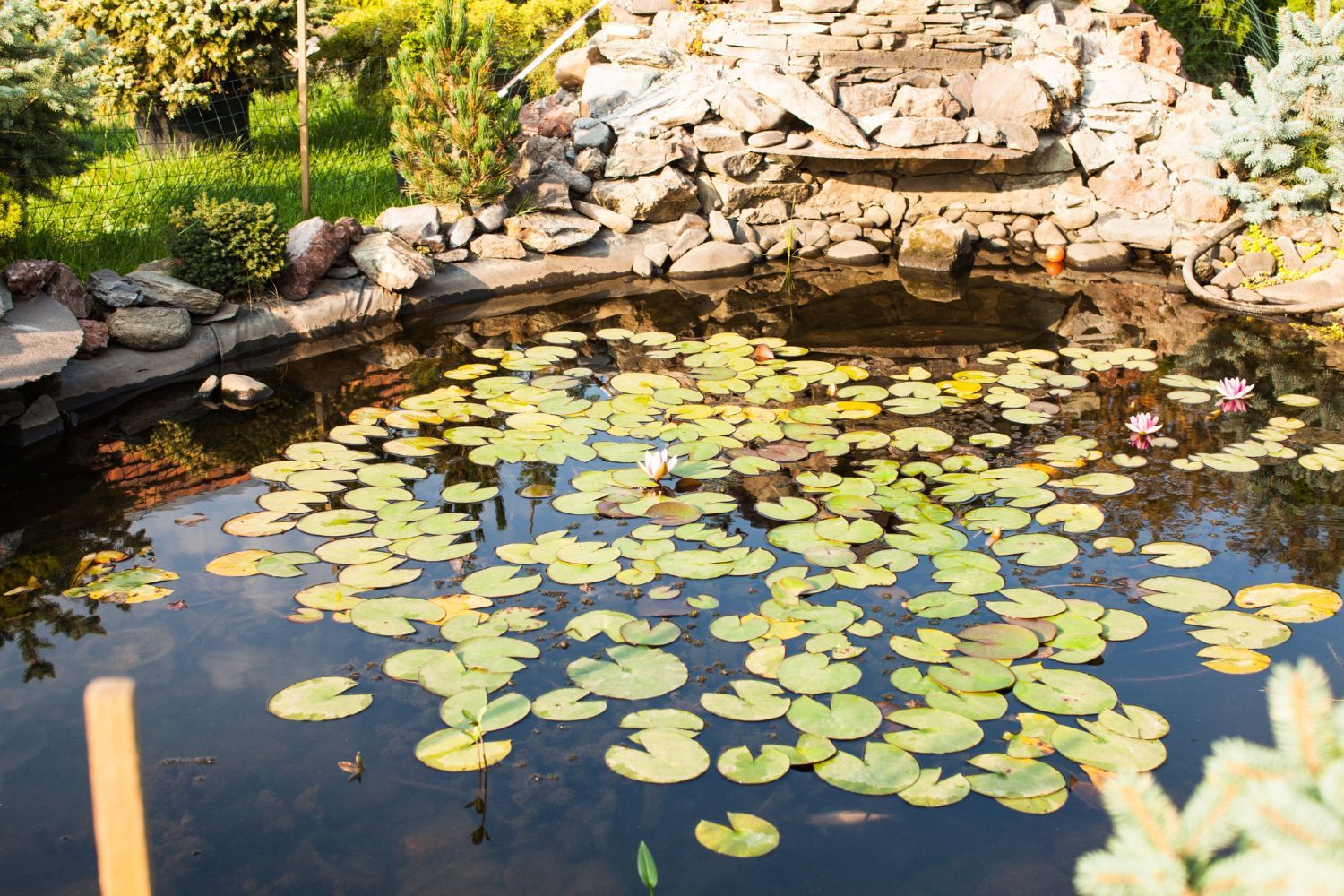
Aquatic plants are your partners in pond maintenance. They shade the water, compete with algae for nutrients, and soften the edges so the pond looks like it has always been there.
Good plant habits include:
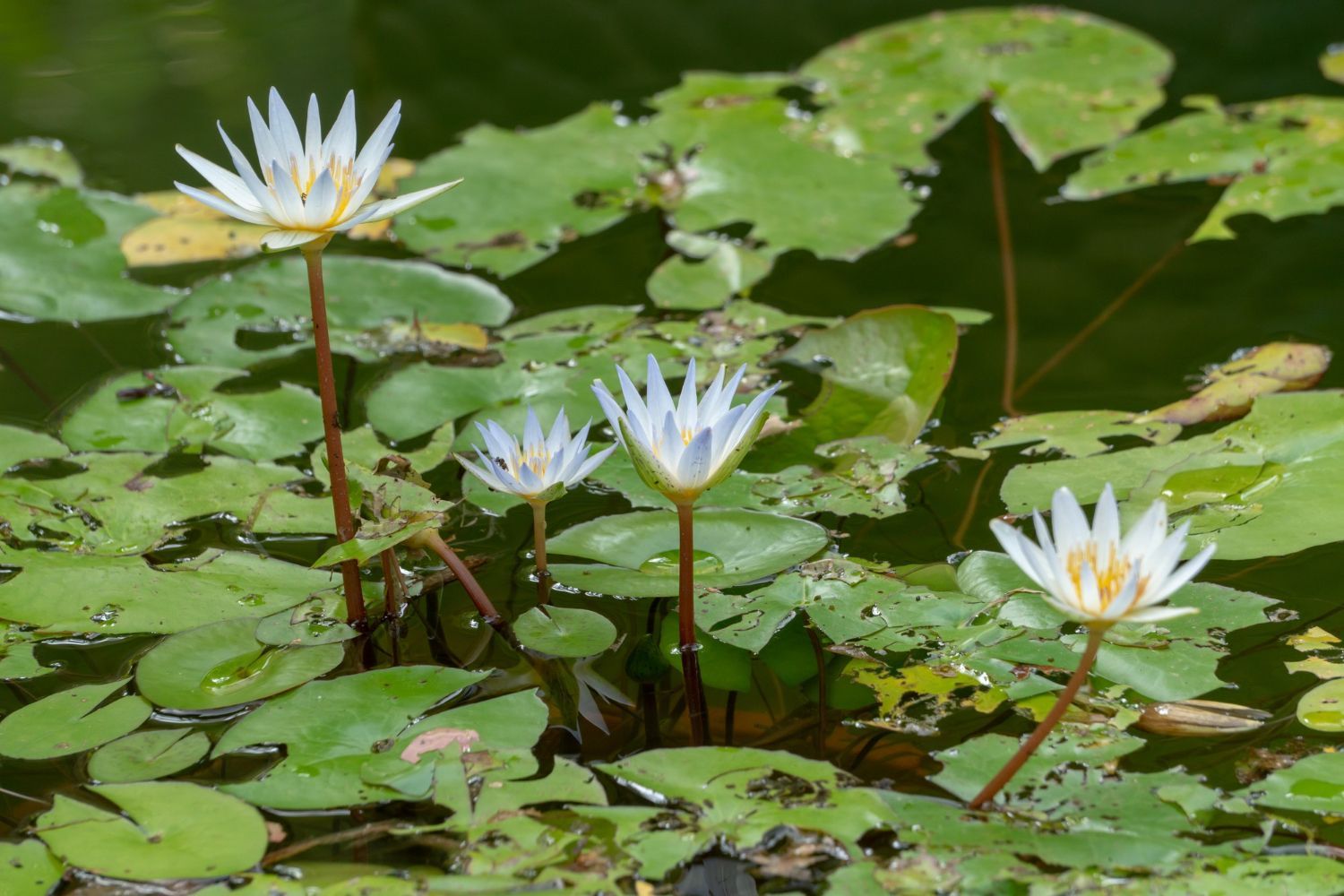
- Using lilies and floaters to cover a portion of the surface
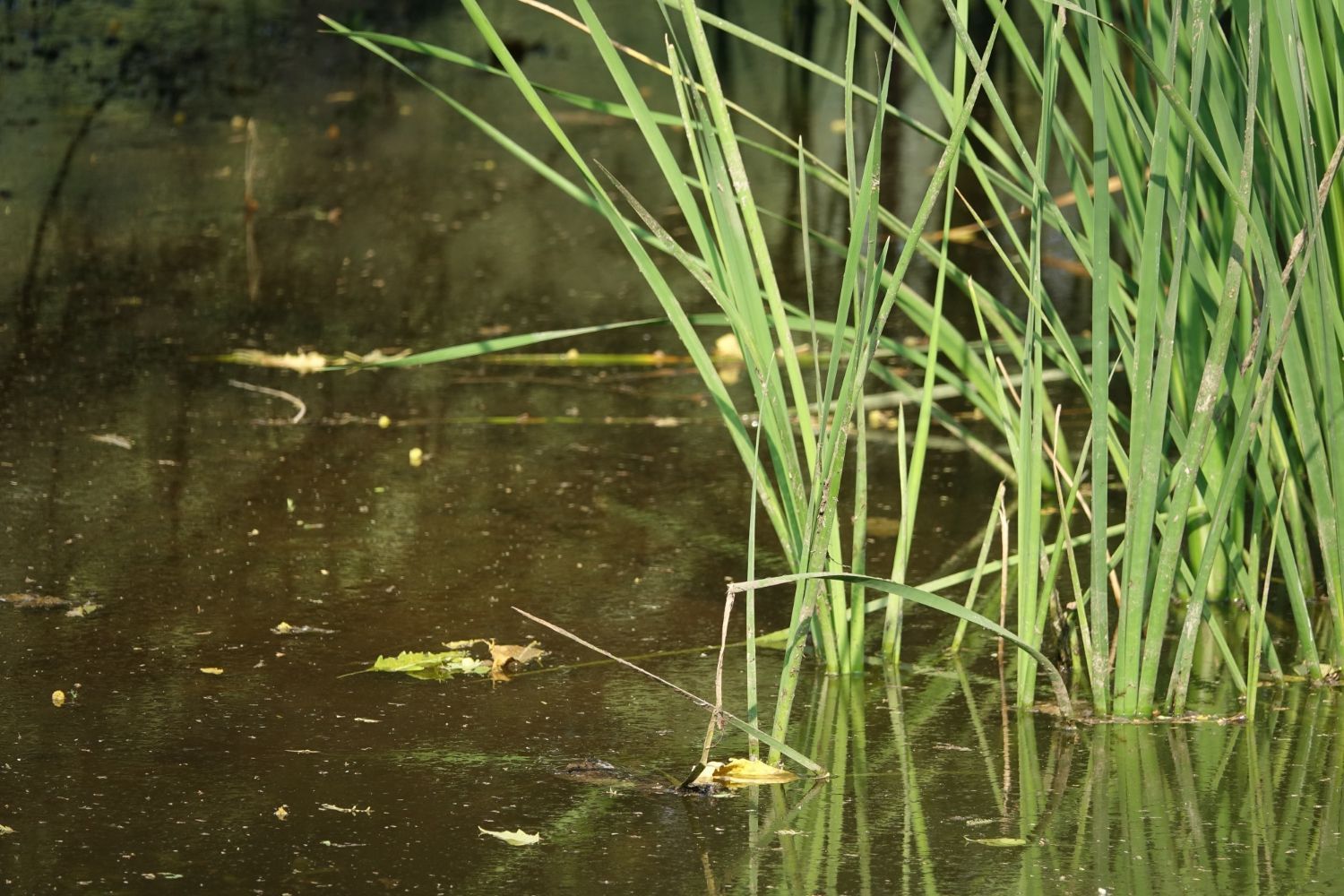
- Keeping marginals healthy and trimmed, not overgrown or rotting
- Removing dead leaves before they sink
Fish load also matters. Too many koi, or feeding too much, can overwhelm your filtration and bacteria. A simple rule: feed only what they eat in a few minutes, and adjust as the weather changes.
Koi Comfort in the Connecticut Heat
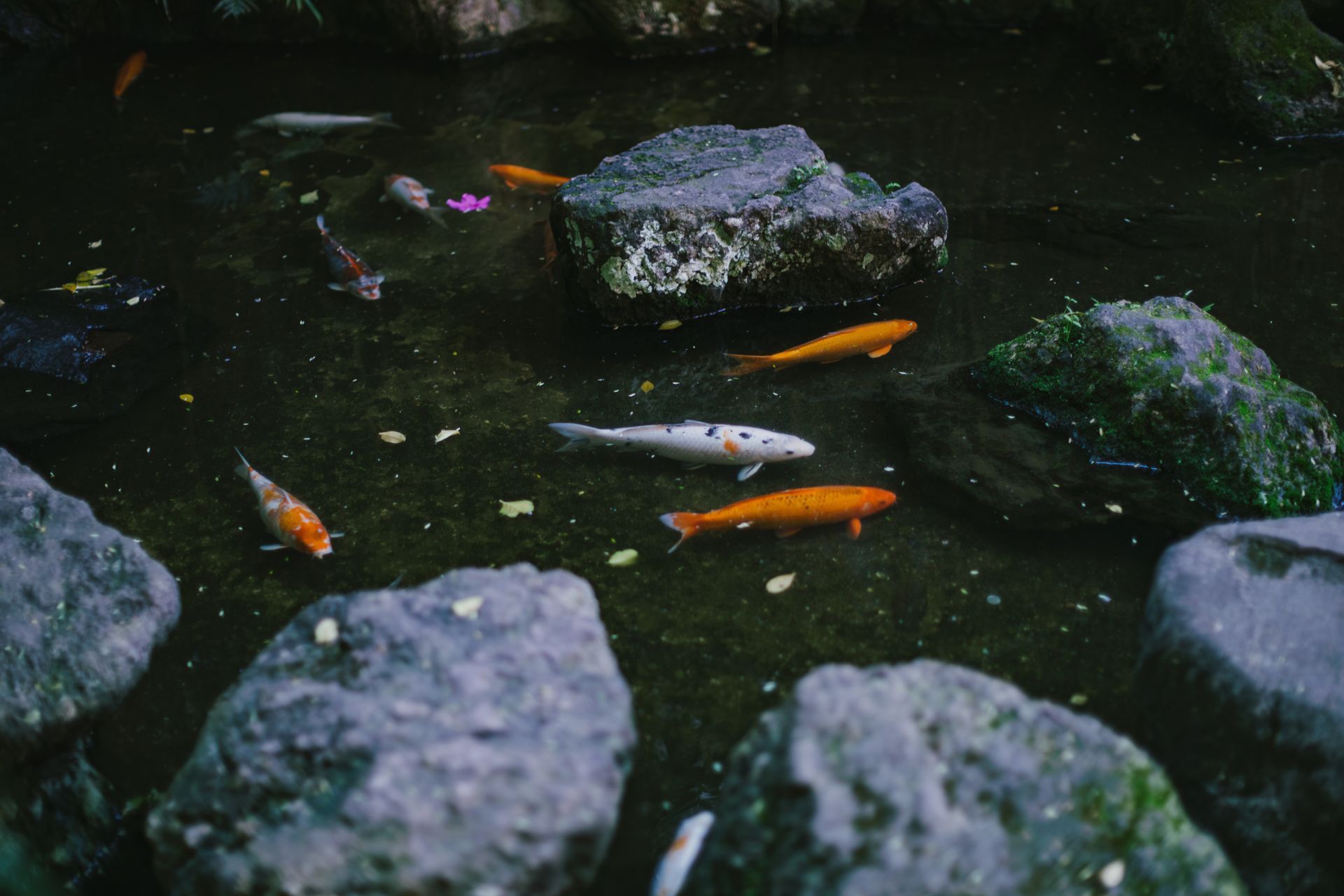
Koi love warm weather, but they still need help staying comfortable in the peak of summer. Their metabolism speeds up as water warms, so they burn through food faster and produce more waste.
For feeding in water around 70 to 80 degrees:
- Offer smaller, more frequent meals instead of one big feeding
- Only feed what they finish in about 3 to 5 minutes
- Skip or reduce feedings during extreme heat or if fish seem stressed
Shade and cooler zones also protect your fish. Lilies and marginal plants help shield the surface, and deeper areas of the pond stay cooler during hot afternoons. Constant water movement near the surface adds oxygen, which is extra important when the air is still and humid.
Watch for stress signs like:
- Listless swimming or hanging in one spot
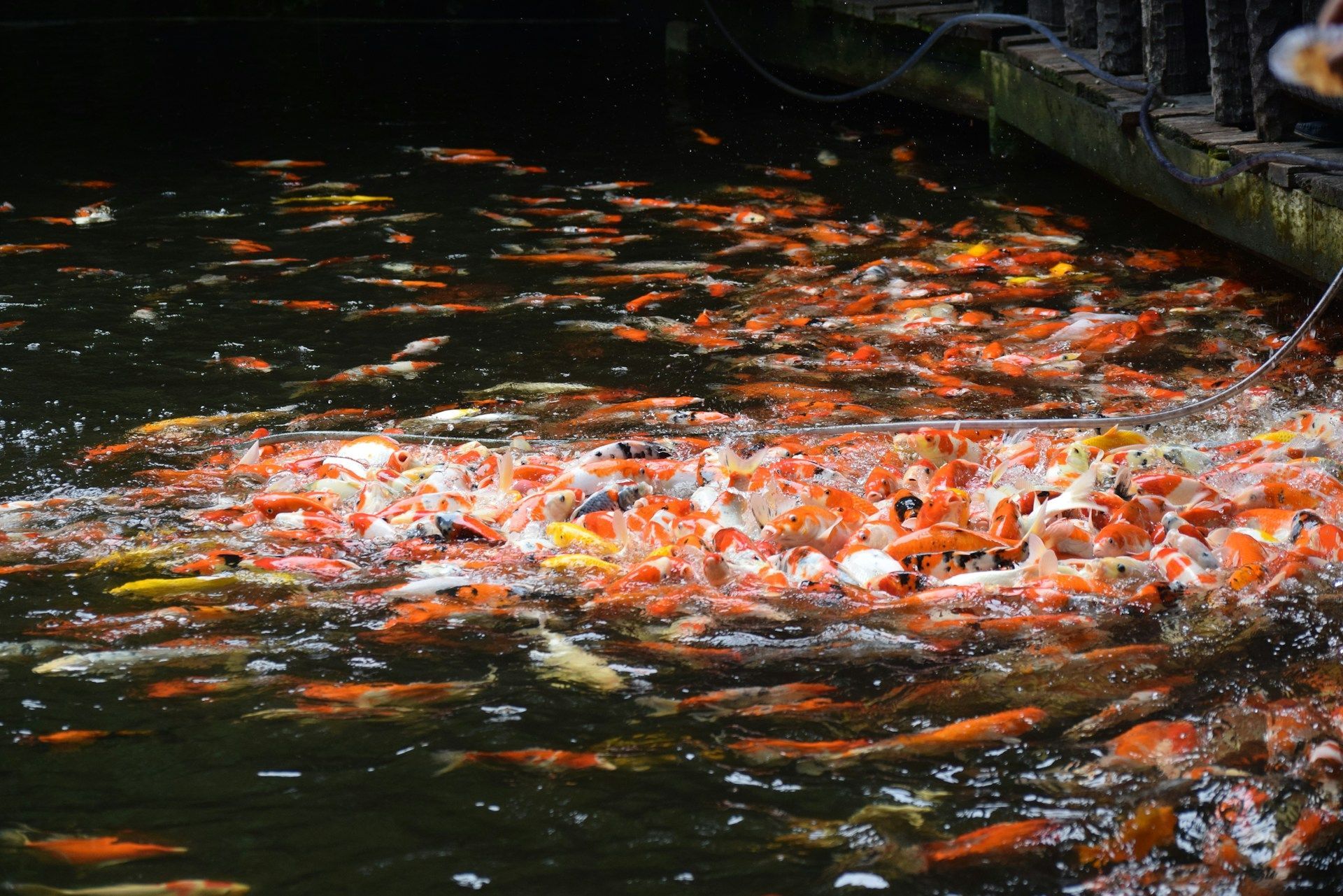
- Clustering near the waterfall return
- Gasping at the surface
Clean water is calming water. Simple mid-summer pond maintenance tasks like clearing decaying leaves, emptying skimmer baskets, and rinsing filter pads in pond water, not tap water, help keep the habitat stable and protect your investment in high-value koi.
Making a New Pond Look Like It Always Belonged
When we build a new pond, we want neighbors to think it has been there for years. That natural, “always belonged” look actually supports the ecosystem too.
Stone placement is a big part of this. We use a mix of rock sizes, from larger boulders to smaller river rock, and we soften edges instead of leaving straight lines. Many stones are partially buried or tucked into the shoreline so they feel settled. This kind of layout:
- Creates hiding spots for koi
- Offers shelter for frogs and insects
- Breaks up flow so water sounds and looks more natural
Planting finishes the story. Layering plants at different heights helps blur the line between pond and yard. Marginals at the water’s edge, lilies and floaters on the surface, and shoreline plants just beyond the rocks help everything blend into the Connecticut landscape. When plants are chosen for our climate, they handle hot summers without constant rescue.
The sensory details are what turn a water feature into a backyard sanctuary. The sound of water over rock, the shimmer of koi gliding under lily pads, and the way evening light reflects off the surface all work together to make a new pond feel deeply rooted and timeless.
Clear-Water Rituals for Late July and August
By late July and August, a few steady rituals keep water clear and calm. Think of them as light, regular care instead of heavy pond maintenance.
A simple weekly routine can include:
- Emptying skimmer and pump baskets
- Checking that waterfall flow looks and sounds normal
- Thinning out plants that cover too much surface
- Skimming off floating debris before it sinks
Smart water changes help during hot, dry stretches. Partial water changes with treated or conditioned water are better than big, sudden swaps. Slow top-offs are kinder to fish and bacteria, and avoiding large temperature swings keeps the ecosystem stable.
Mid-season is also a good time to fine-tune:
- Reduce feeding a bit during heat waves
- Add more shade with lilies or floating plants
- Refresh beneficial bacteria to support biological filtration
When these small habits are in place, the water stays clear, the koi stay relaxed, and the sound of the waterfall stays soft and soothing.
At PD Waterscapes, we see every pond as a living landscape designed by nature and shaped by thoughtful hands. With attentive mid-summer care, your Connecticut pond can reward you with glassy reflections, gentle water music, and koi that glide calmly just below the surface, all season long.
Protect Your Pond’s Beauty With Expert Care
Keep your water clear, your fish healthy, and your equipment running smoothly with our professional
pond maintenance services. At PD Waterscapes, we tailor maintenance plans to your pond’s unique needs so small issues never become big problems. If you are ready to set up a routine service or have questions about your pond’s condition,
contact us and we will help you choose the right solution.