Designing a Pond That Looks Like It Always Belonged
A koi pond should feel like it grew out of your yard, not like a plastic tub dropped in by a machine last week. When the stonework, aquatic plants, koi, and filtration all work together, the pond looks and acts like a natural pool in the Connecticut countryside. The water is clear, the edges are soft and green, and the whole space feels calm.
At PD Waterscapes, we focus on what we call the “Always Belonged” aesthetic. That means local stone, gentle curves, and layered plantings that blend into your existing trees, beds, and lawn. Here, we will walk through how smart aquatic plant zoning, paired with rockwork and filtration, creates a thriving ecosystem, keeps koi healthy, and turns your backyard into a true sanctuary.
The Five Elements of a Thriving Koi Pond Ecosystem
A beautiful pond starts with what you cannot see. Filtration is the quiet powerhouse in the system. Mechanical filters trap leaves and debris so they do not rot in the water. Biological filtration is where beneficial bacteria live on filter media and slowly break down fish waste. Clean, oxygen-rich water means clearer views, less trouble with algae, and better protection for your koi.
Rocks and gravel help the pond look like it has been there for decades. A gravel bottom covers the liner, gives bacteria more places to grow, and softens the look. When boulders are partly buried and stone sizes vary, the pond starts to feel like a natural streambed. All that stone also helps buffer temperature swings during summer heat.
Aquatic plants are living water filters. They soak up extra nutrients in the water that would otherwise feed string algae. The right mix of plant types provides:
- Shade for koi in the heat
- Shelter and spawning spots for fish and frogs
- Color, texture, and movement through the growing season
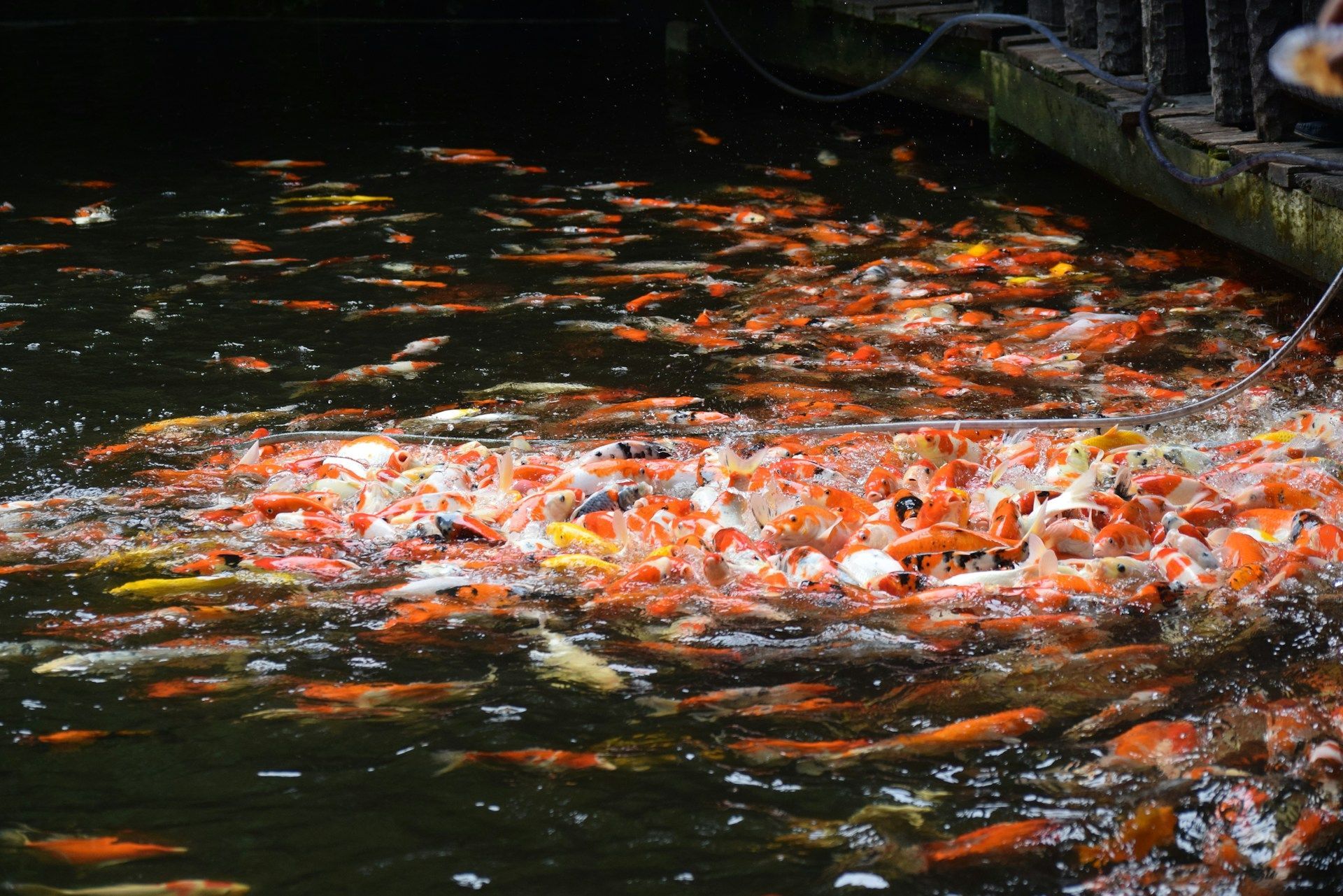
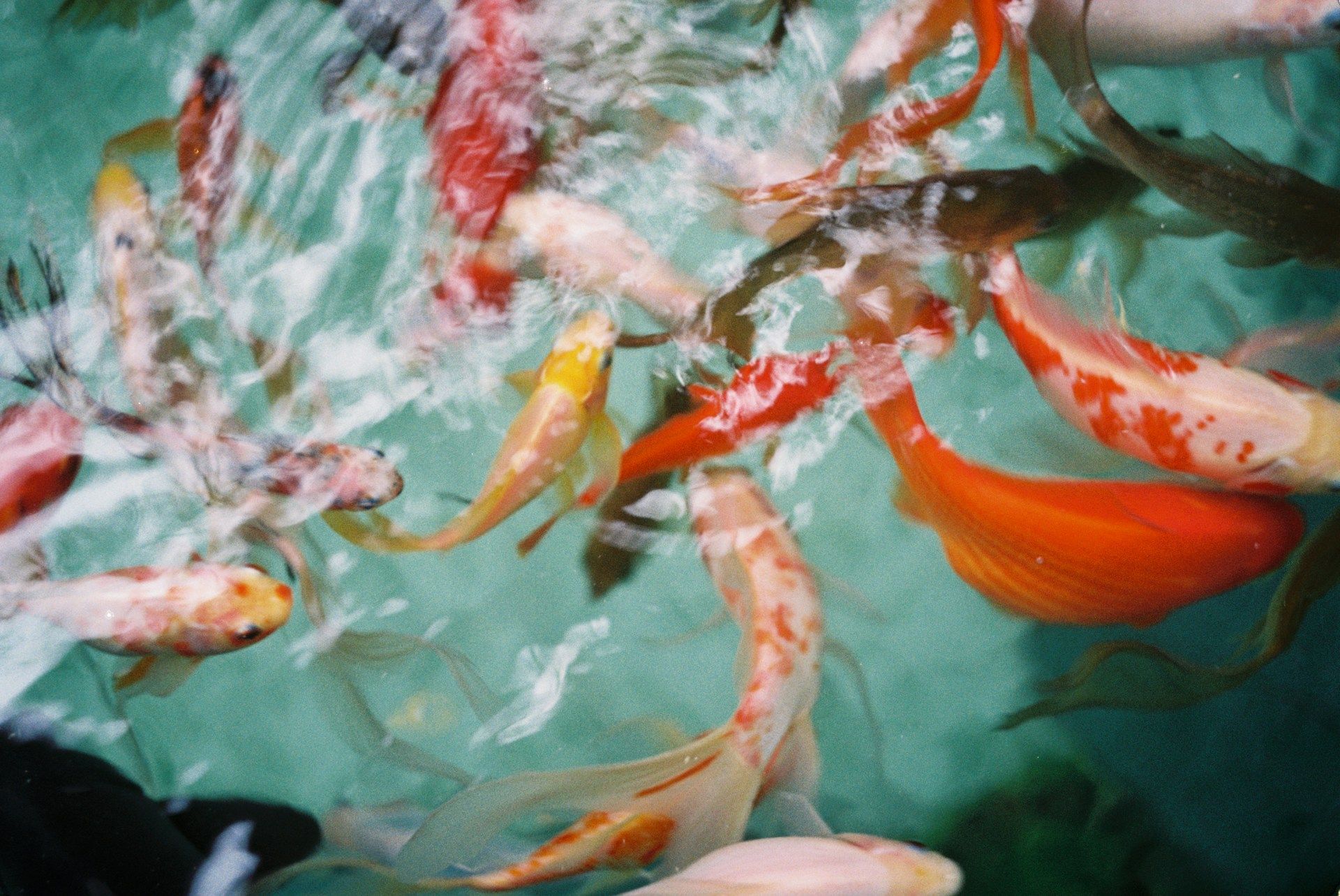
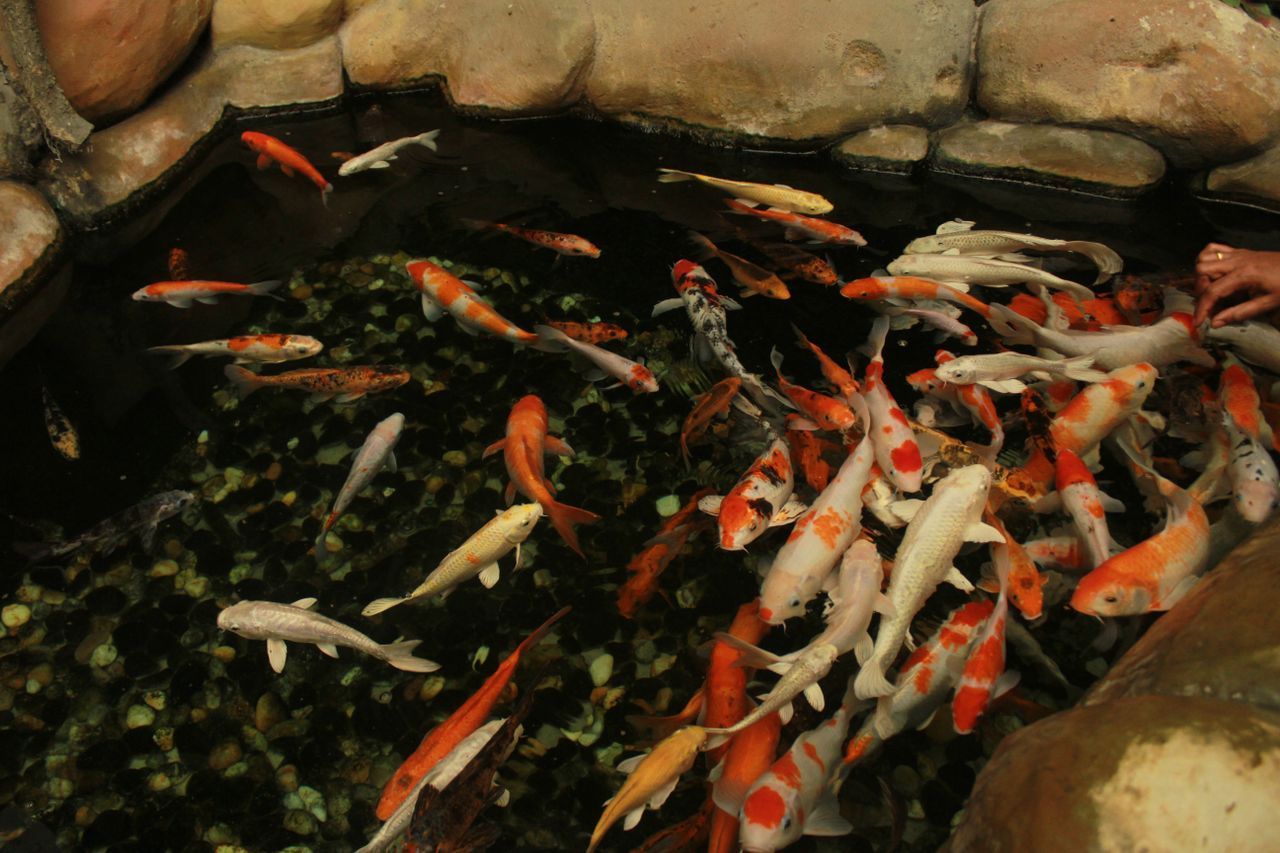
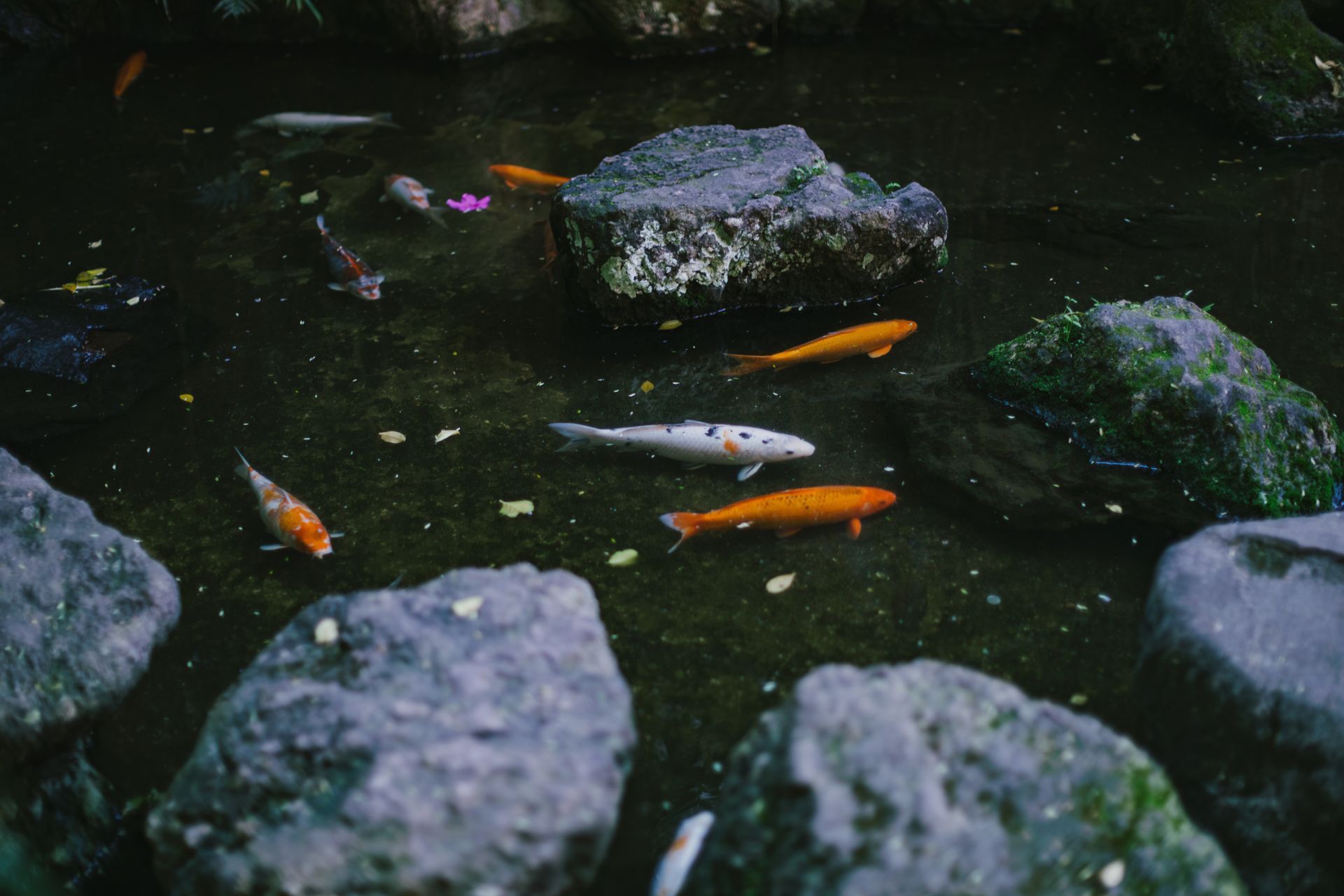
Koi are the heart of the pond. They are pets, and for many people, long-term investments. Their health depends on all the other pieces working together. Steady oxygen levels, balanced bacteria, and good plant cover help koi handle hot July afternoons and winter transitions.
Behind the scenes, beneficial bacteria are the cleanup crew. They live on rocks, gravel, filters, and even plant roots. In simple terms, they turn toxic ammonia from fish waste into nitrite, then into less harmful nitrate that plants can use. In warm summer water, when fish eat more and waste builds up faster, these bacteria work even harder to keep the system safe.
Mapping Aquatic Plant Zones Like a Natural Shoreline
Well-planned aquatic plant zones make an artificial pond act more like a wild pond. Different plants like different water depths, so we design the pond shape with this in mind. Common depth zones are:
- Bog edge:
0 to 2 inches deep
- Marginal shelf:
2 to 12 inches deep
- Transition zone:
12 to 24 inches deep
- Deeper zone: 24 to 48 inches or more
The bog and edge zones are where land and water meet. Shallow, wet edges are perfect for moisture-loving plants with strong roots. These plants help stabilize soil, filter runoff, and blur the line between pond and garden beds. Irregular, curved shorelines and staggered stones keep you from seeing a hard “bathtub ring” around the pond.
The marginal shelf, about 2 to 12 inches deep, is the main work zone for aquatic plants. Many of the plants that drive biological filtration live here. Grouping them in clusters around and behind boulders copies how plants grow along wild stream banks. With good plant choices, this shelf can feel full from late spring through fall in Connecticut, even as different plants take turns shining.
Choosing Aquatic Plants That Feel Designed by Nature
We like to mix plant types so the pond has structure and function. Each group plays its own role:
- Floaters sit on the surface and shade the water
- Submerged plants grow underwater and add oxygen
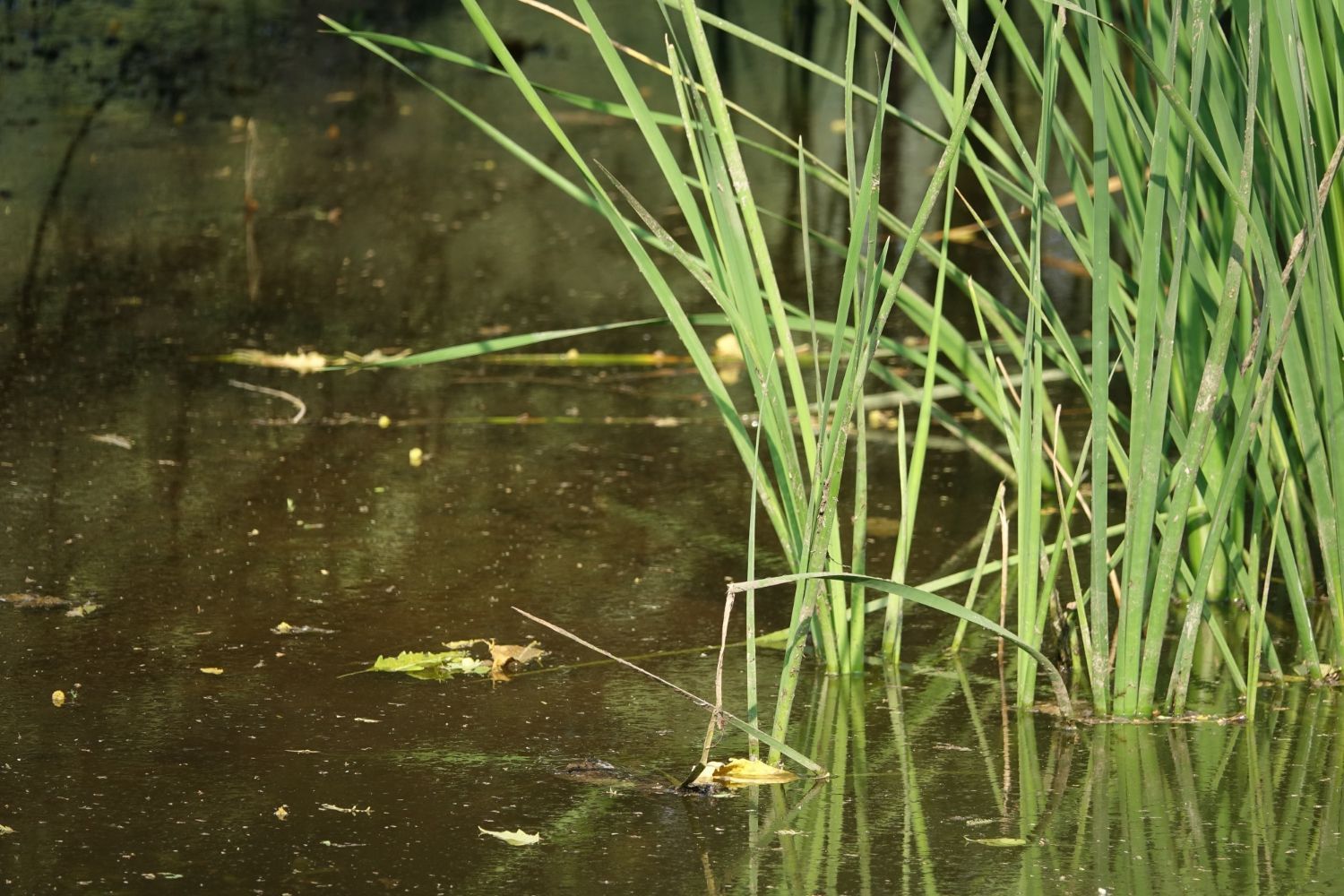
- Marginal plants stand in the shallows and filter nutrients
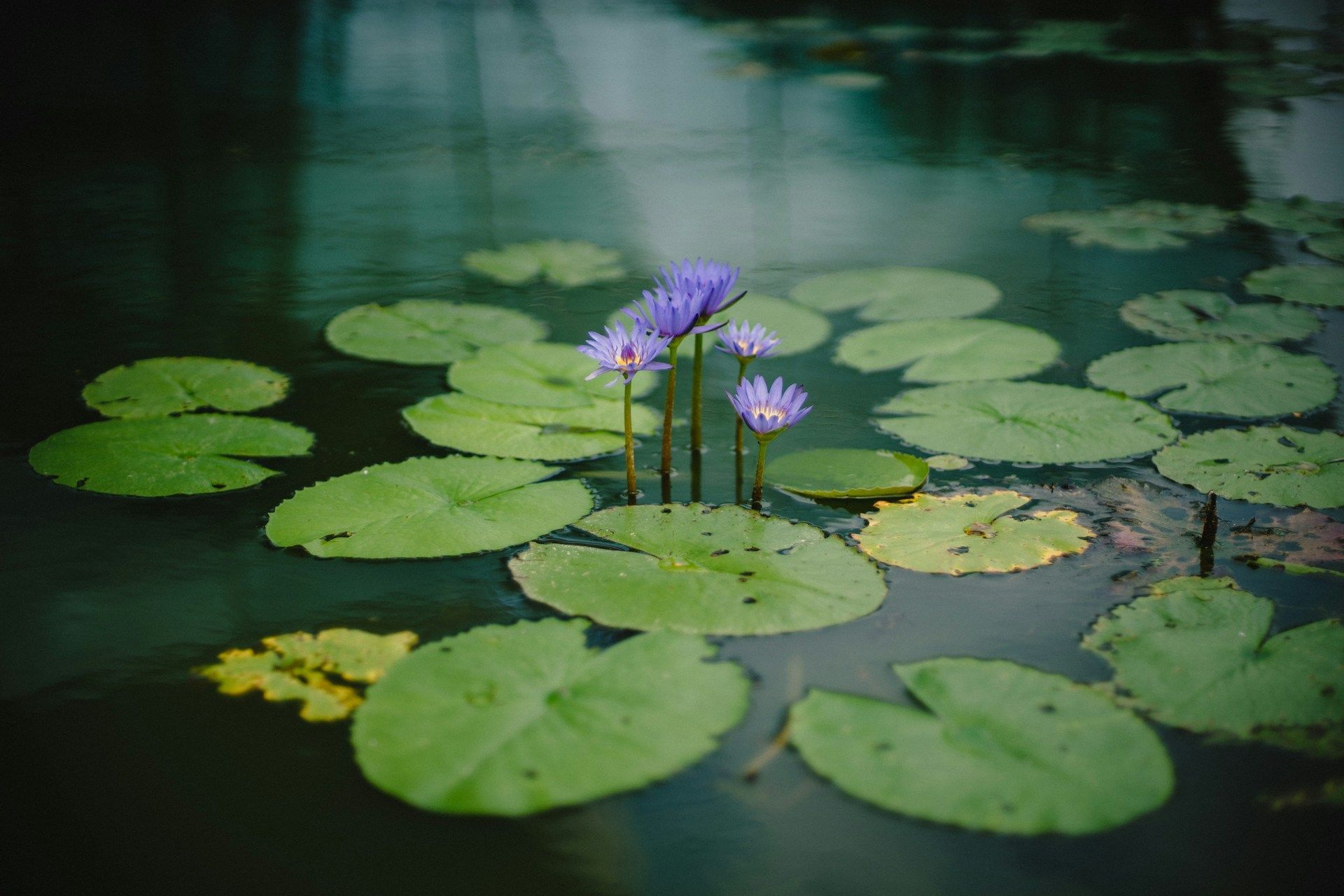
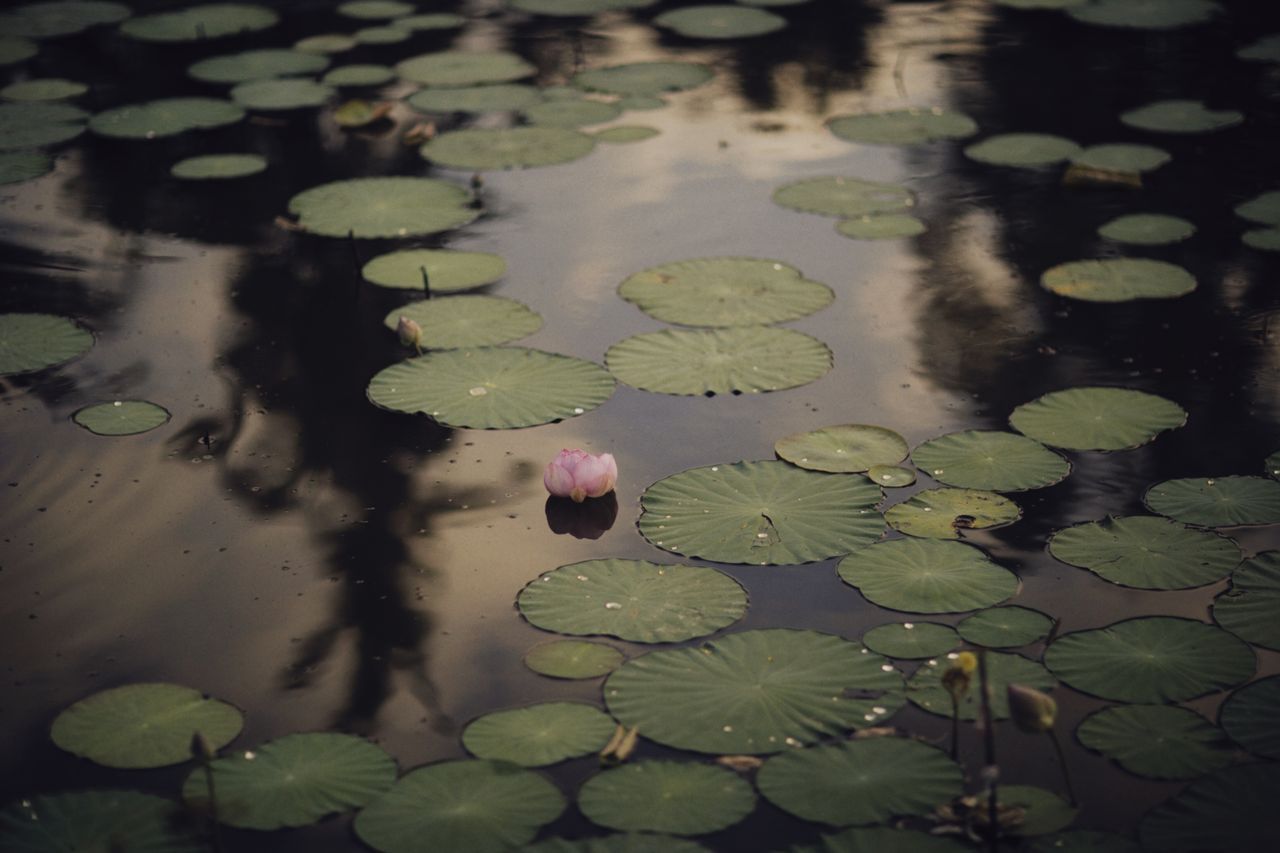
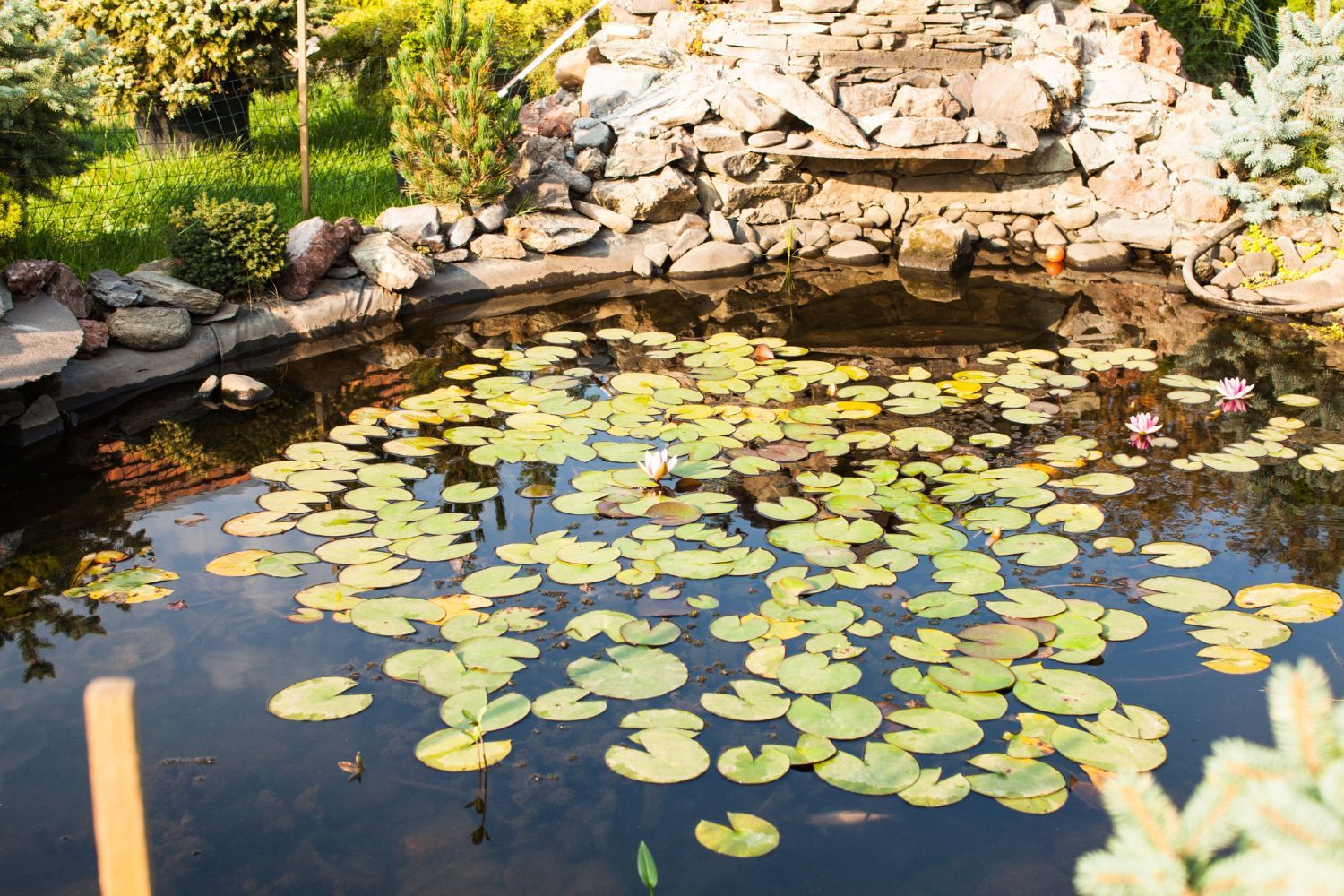
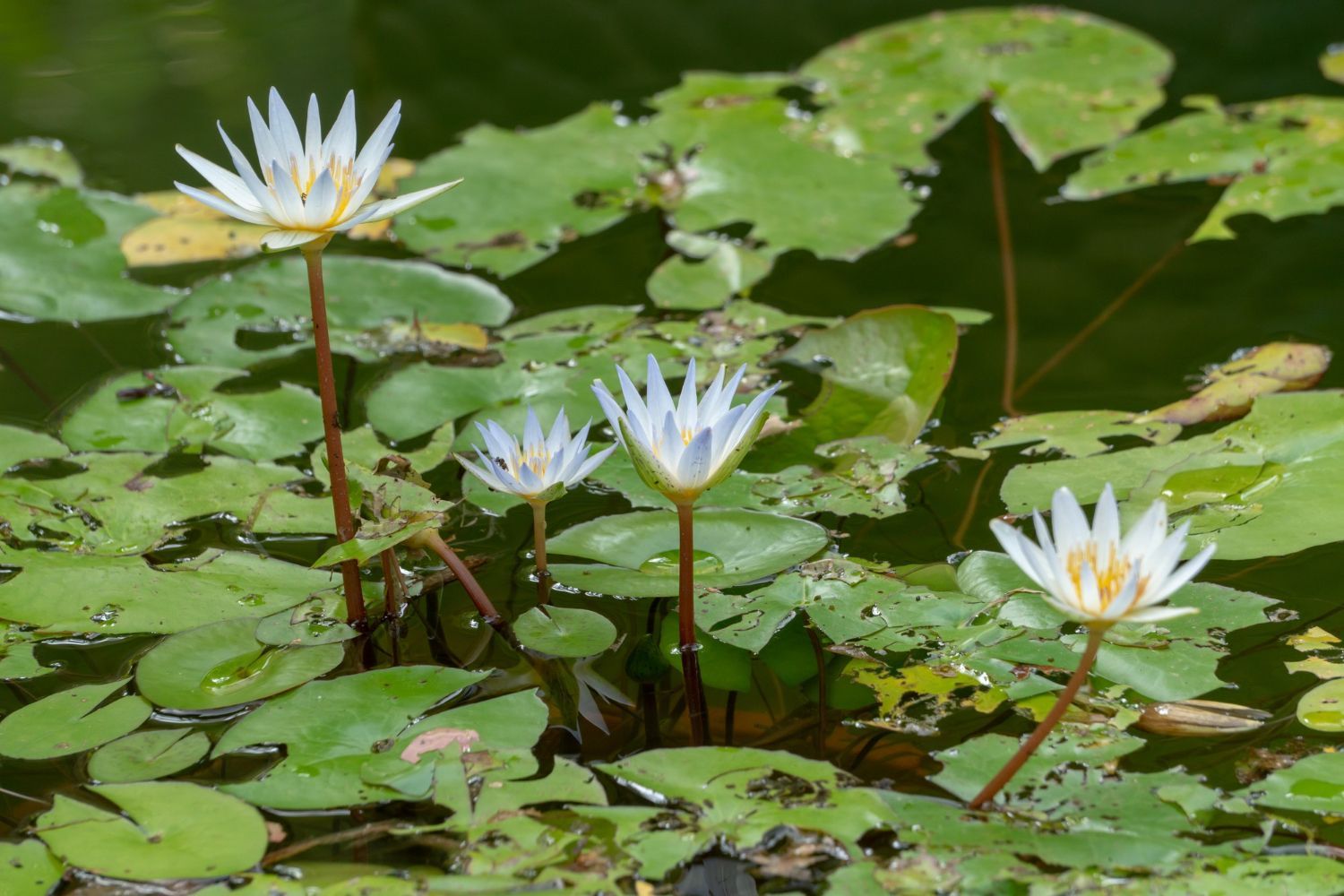
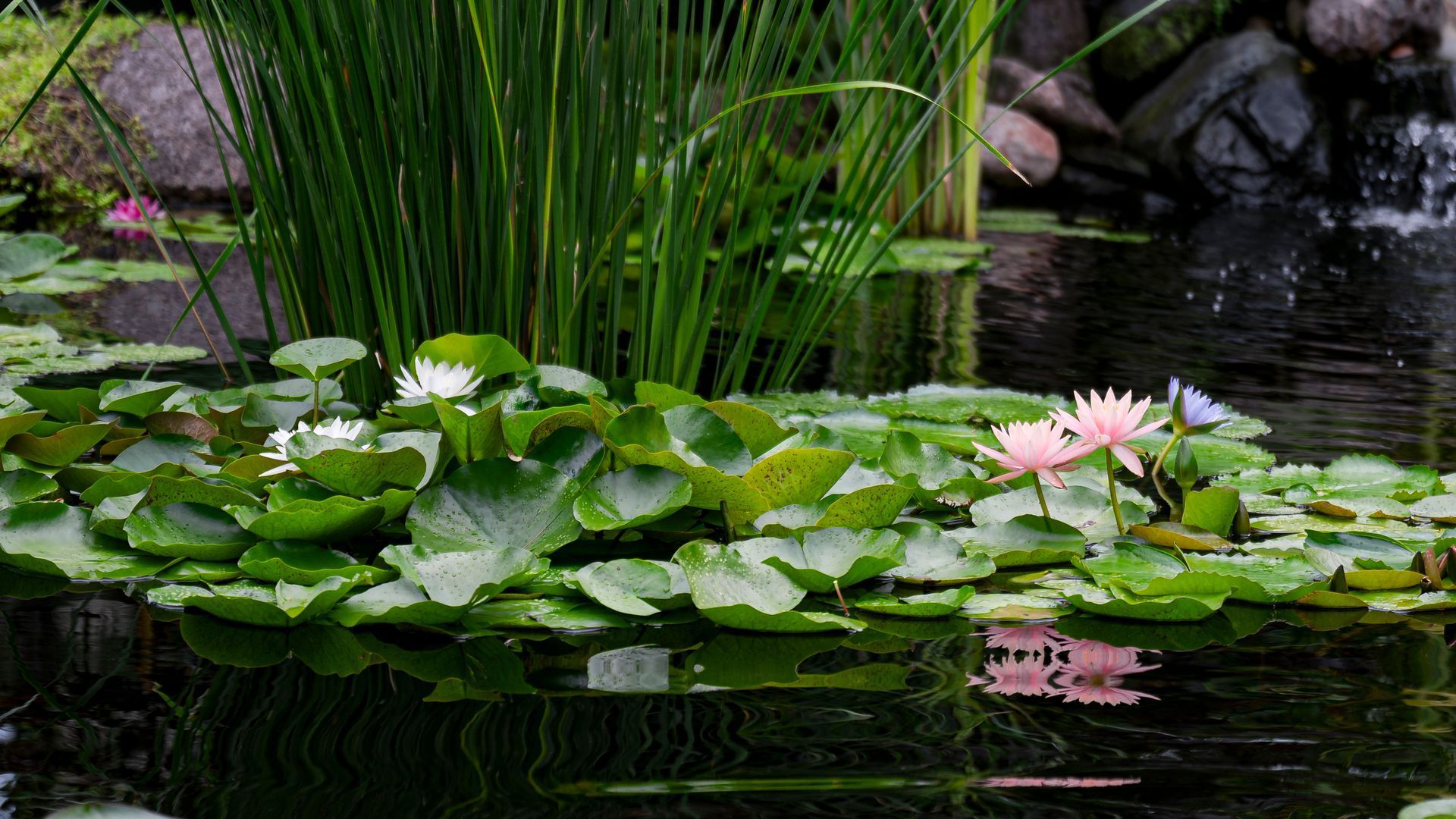
- Water lilies spread broad leaves across the surface
When roughly 40 to 60 percent of the surface is shaded by aquatic plants and lilies, the water usually stays clearer and cooler. Layering from low creepers between stones, to medium-height clumps, to occasional tall accents makes a new pond look mature much faster.
Seasonal interest matters too. In spring, fresh greens and new shoots signal that the pond is waking up. In summer, blooms and broad leaves fill in and offer cooling shade for koi. Later in the season, seed heads and changing foliage keep the pond from looking bare. Over time, the plants knit into the rocks and shoreline, deepening that “designed by nature” feel year after year.
We always respect koi and local conditions. Some plants hold up better when curious koi nibble and dig, so we choose koi-friendly varieties and use stone pockets to protect tender roots. In Connecticut, cold winters mean we lean on hardy aquatic plants that can return reliably. Sun patterns, nearby trees, and local wildlife also shape our plant list so the pond feels truly “of the place,” not like a random set of plants from a catalog.
Designing with Stone, Plants, and Sound for Koi and People
Stone placement is where the “Always Belonged” look really comes to life. Partially burying boulders into the soil instead of perching them on the liner makes the pond edge feel geologic, as if water slowly carved its way there. Overlapping stone lines and varied sizes trick the eye into seeing a natural streambed. We tuck aquatic plants into crevices and pockets to hide liners, skimmers, and other modern parts.
Waterfalls and streams are more than pretty features. When we shape narrow, uneven spillways, the water breaks and tumbles, which adds oxygen for the koi and creates a layered sound. Some homeowners like a gentle trickle that whispers in the background. Others prefer a lively cascade that masks road noise and turns the yard into a private retreat.
Plant and stone layout should also respect koi comfort. Koi like:
- Shaded spots for hot sunny afternoons
- Open areas for easy swimming and viewing
- Sheltered nooks where they can rest and feel safe
By mixing open water with planted coves and ledges, we copy how fish use natural streams. This thoughtful layout invites you outside too. When you sit by the edge each day, you can notice small changes in koi behavior or water clarity long before problems build.
Caring for Koi and Aquatic Plants Through Every Season
Once the pond is built, light, regular care keeps the ecosystem strong. In summer and early fall, koi eat more because the water is warmer. Feeding steady, moderate amounts, and not overdoing it, helps keep the filters and bacteria from getting overwhelmed. It also helps to:
- Check that waterfalls and skimmers are flowing well
- Thin fast-growing plants so they do not crowd others
- Remove yellowed leaves before they decay in the water
Watching koi behavior and water clarity is one of the best early warning tools. If fish seem sluggish, hide constantly, or the water turns cloudy or green, the system may be out of balance.
We prefer steady support instead of drastic seasonal cleanouts. When we leave healthy bacteria colonies on rocks, gravel, and plant roots, the pond bounces back faster after storms or temperature swings. Adding beneficial bacteria at key times, like after heavy rain or water changes, can help keep the nitrogen cycle steady and reduce the need for chemical treatments. As the mix of aquatic plants matures, they usually take on more of the filtration work on their own.
Long-term, caring for a koi pond is like tending a living, changing garden. Each year, roots spread a bit more, rocks settle in, and koi grow and show their colors. Occasional professional tune-ups help keep pumps, filters, and rockwork in good shape so everything runs quietly and reliably. A well-designed koi pond should feel less like a high-maintenance feature and more like a natural sanctuary that simply belongs in your Connecticut backyard, growing richer and more peaceful with every season.
Get Started With Your Project Today
Transform your yard into a thriving waterscape by choosing the right mix of
aquatic plants that support a healthy, balanced pond. At PD Waterscapes, we work with you to design and build an ecosystem that looks beautiful and stays low maintenance over time. If you are ready to talk through ideas or schedule a consultation, simply
contact us and we will help you plan the next steps.