Let the Sound of Water Reset Your Whole Home
A koi pond does more than look pretty in your backyard. The sound of moving water can change how your whole home feels, from the moment you step inside. When the window is open and you hear a gentle rush of water, it tells your body it is time to slow down.
After a long day in West Hartford or a nearby town, soft water sounds can be the cue that you are off duty. A well-designed koi pond creates a calm, steady sound that drifts through open windows, smooths out the street noise, and makes family sounds feel softer. It turns an everyday house into a quiet retreat, even if cars are passing out front.
That soothing sound does not happen by accident. It comes from thoughtful design, not just digging a hole and filling it with water. The shape, stone work, plants, and water flow all work together so your pond sounds like nature, not a backyard fountain. When everything is balanced, you get less stress, deeper rest, and a sense that your home is wrapped in calm.
In the sections below, we will talk about how a koi pond that feels designed by nature is built, how the five elements of a thriving ecosystem (filtration, rocks and gravel, plants, fish, and bacteria) work together, and how koi care keeps your backyard sanctuary peaceful year after year.
Designing a Pond That Sounds Like It Always Belonged
The best koi ponds feel like they grew out of the land. We call this the “Always Belonged” look. The sound is a big part of that. Instead of loud splashes, you hear layers of tumbling, trickling, and whispering water.
We use stones of different sizes to shape the voice of the pond. Large boulders guide the main flow. Cobbles and smaller rocks break the water into ripples and tiny falls. Gravel fills in gaps so water does not drop in a harsh sheet but glides and curls around stone.
A few simple choices make a big difference in sound:
- Taller drops near patios and outdoor seating for a livelier, energy-boosting sound
- Lower, softer falls near bedroom windows to create a gentle murmur for rest
- Curved streams rather than straight runs so water swirls and quiets as it moves
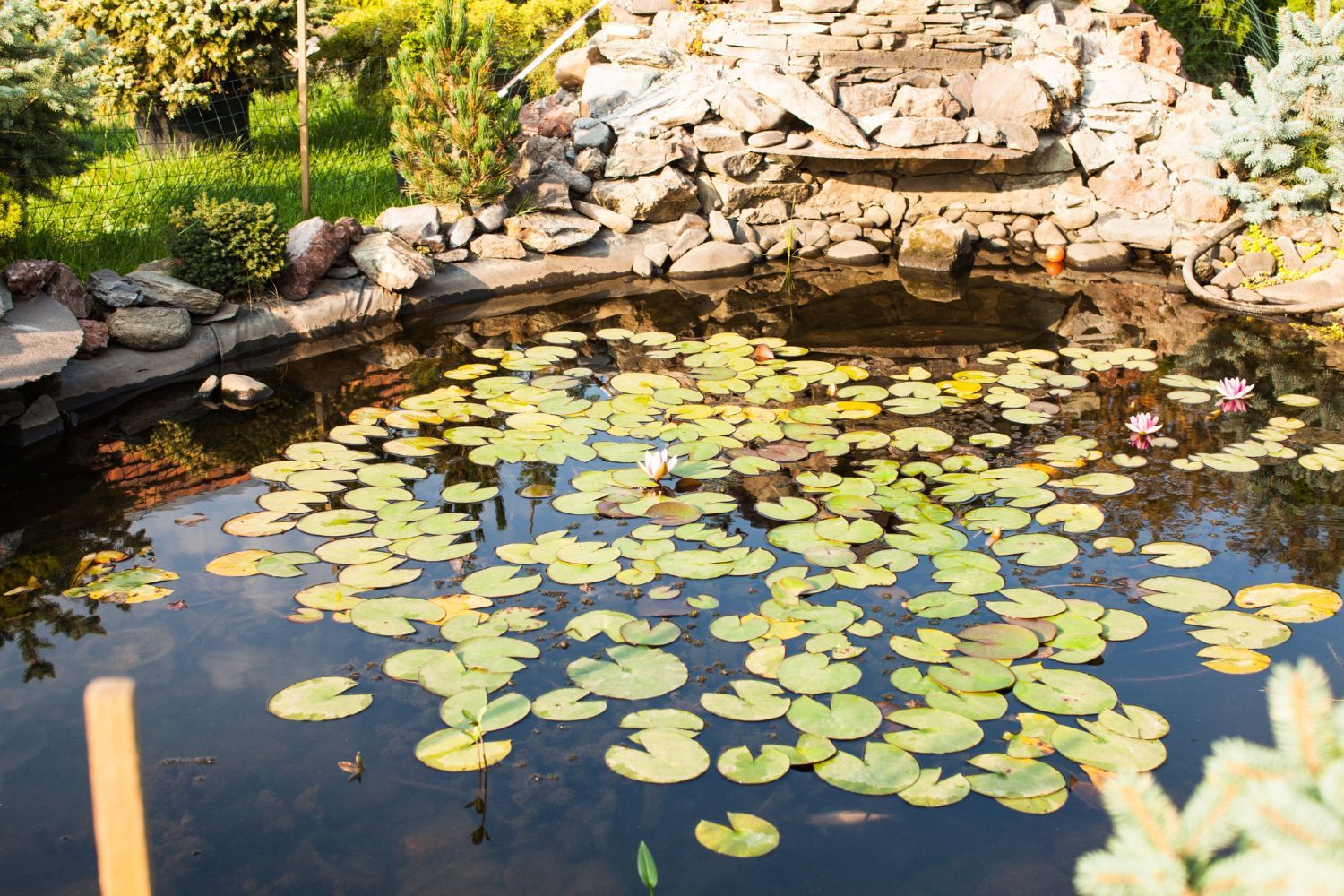
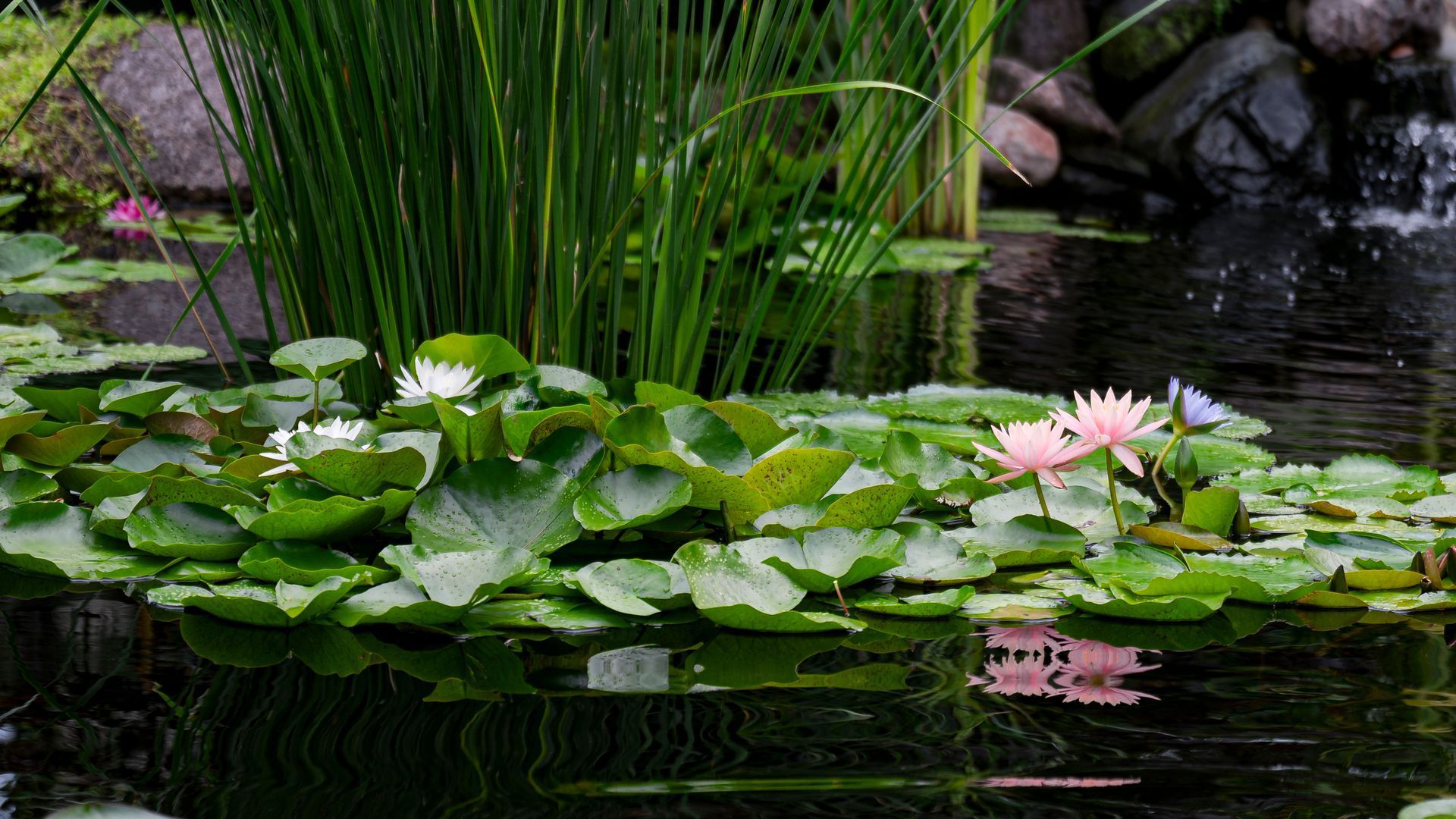
Plants help the pond feel like it has been there for decades. Native and aquatic plants along the edges blur the line between pond and yard. Their leaves catch sound, soften edges, and turn shiny stonework into something that feels wild and settled, an “Always Belonged” aesthetic that looks like it has been there for years.
When we plan a pond, we also think about:
- Where shade will fall as trees leaf out each year
- How leaf drop in fall will affect the surface
- What the pond will look like in winter when branches are bare
By working with the natural slope of your yard, any existing trees, and nearby patios or decks, we tuck the pond into the land. This way, the sound of water seems to rise from the ground itself, not from a fixture that was placed on top of it. The result is a backyard sanctuary that feels like it always belonged there.
The Five Elements of a Healthy and Peaceful Koi Pond
A beautiful soundscape only lasts if the pond itself is healthy. A thriving ecosystem keeps the water clear, the koi happy, and the sound calm and steady. In a well-balanced koi pond, five elements work together: filtration, rocks and gravel, plants, fish, and beneficial bacteria.
Filtration
Mechanical and biological filtration quietly move and clean the water. A skimmer pulls in leaves and debris at the surface. A biofilter gives beneficial bacteria a place to live so they can clean the water. This biological filtration quietly turns fish waste and excess nutrients into forms the system can use.
When these pieces are properly sized and placed, pumps work in the background instead of being the loudest thing in your yard. You get clear water, a steady, natural flow, and a pond that works with nature instead of against it.
Rocks and Gravel
Stone at the bottom of the pond does more than protect the liner. Rocks and gravel:
- Give bacteria a huge surface area to live on
- Support biological filtration and a stable, thriving ecosystem
- Break up water movement so there is less echo
- Create soft, layered sound as water slips between gaps
This is one reason a finished pond feels like a part of nature, not a smooth, empty bowl.
Plants
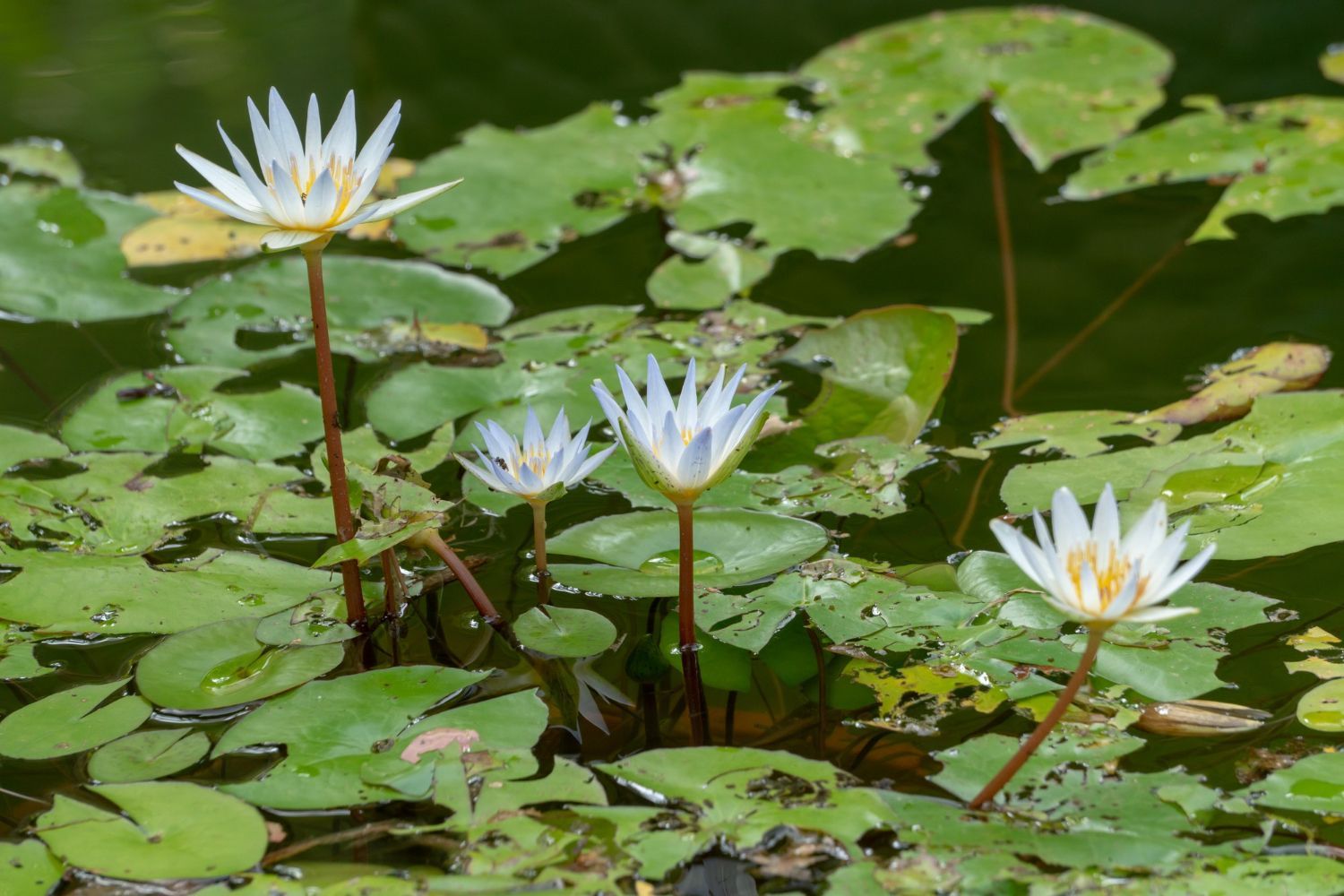
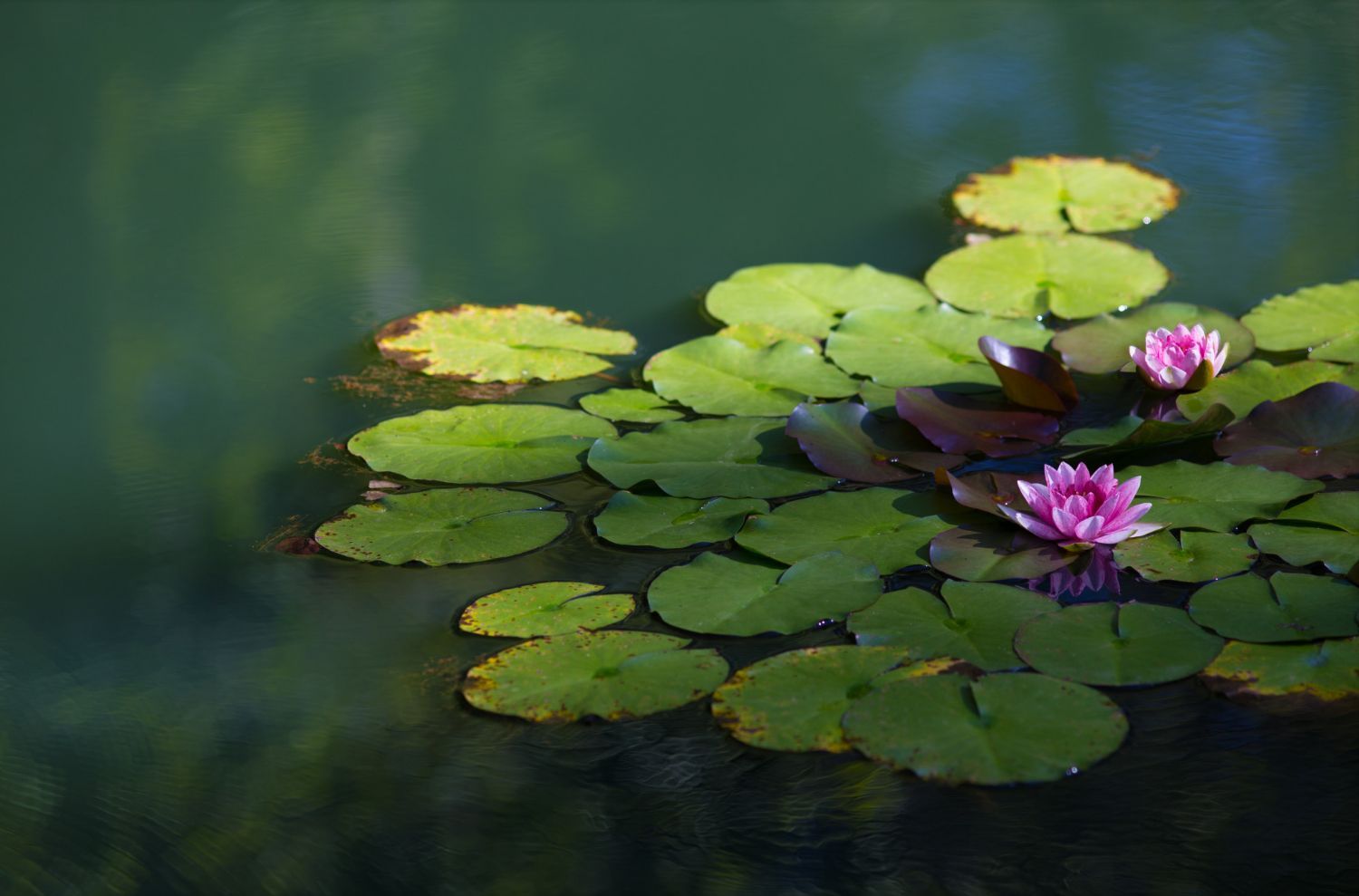
Marginal plants along the edges and floating plants on the surface help shade the water and give koi places to feel secure. As water moves around stems and leaves, it makes the sound rounder and more organic. Plants also soak up nutrients that would otherwise feed algae, which keeps your water clearer and your view and sound more relaxing.
Choosing a mix of native and aquatic plants supports pollinators and local wildlife, turning your pond into a true backyard sanctuary and a living, sustainable landscape feature.
Fish
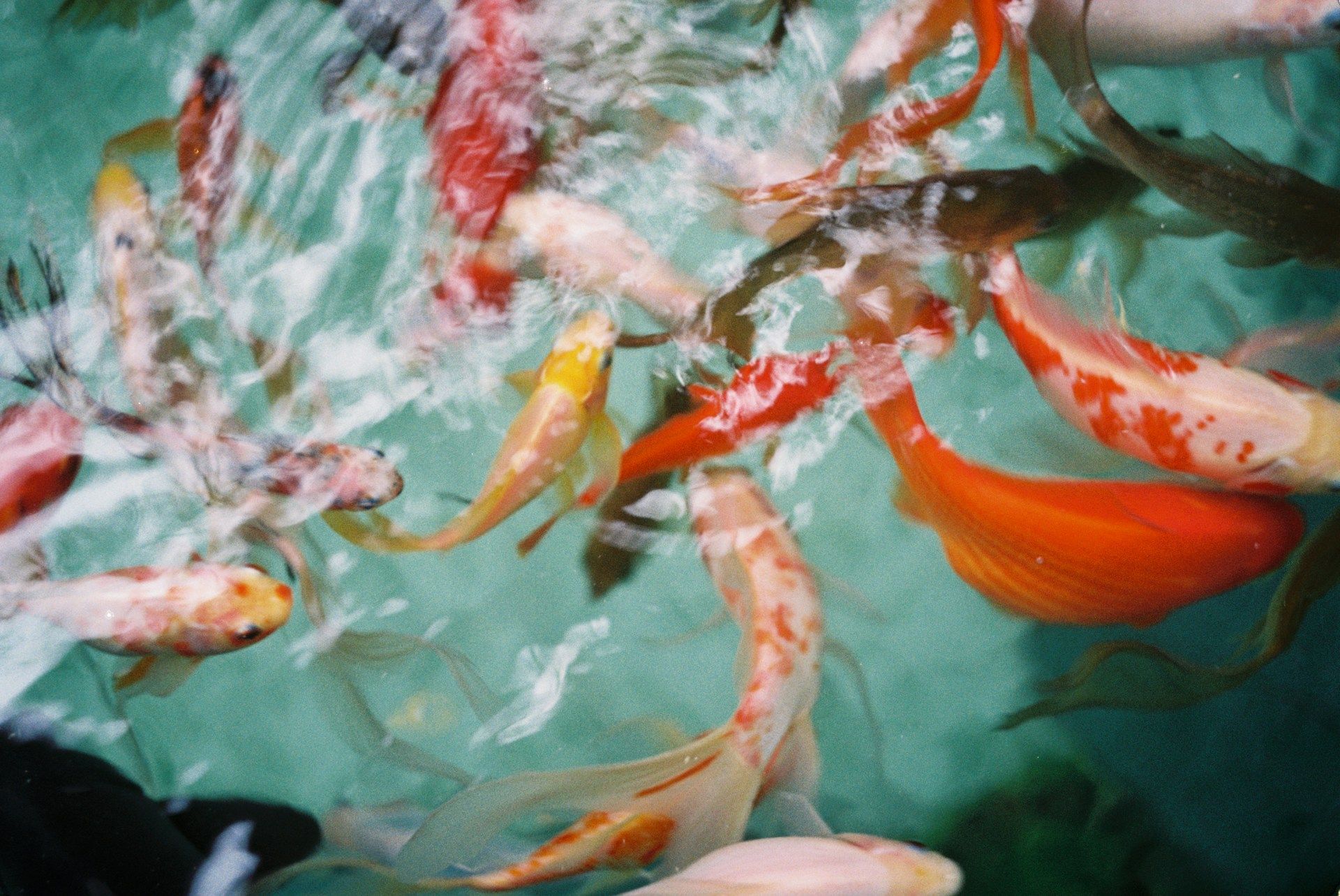
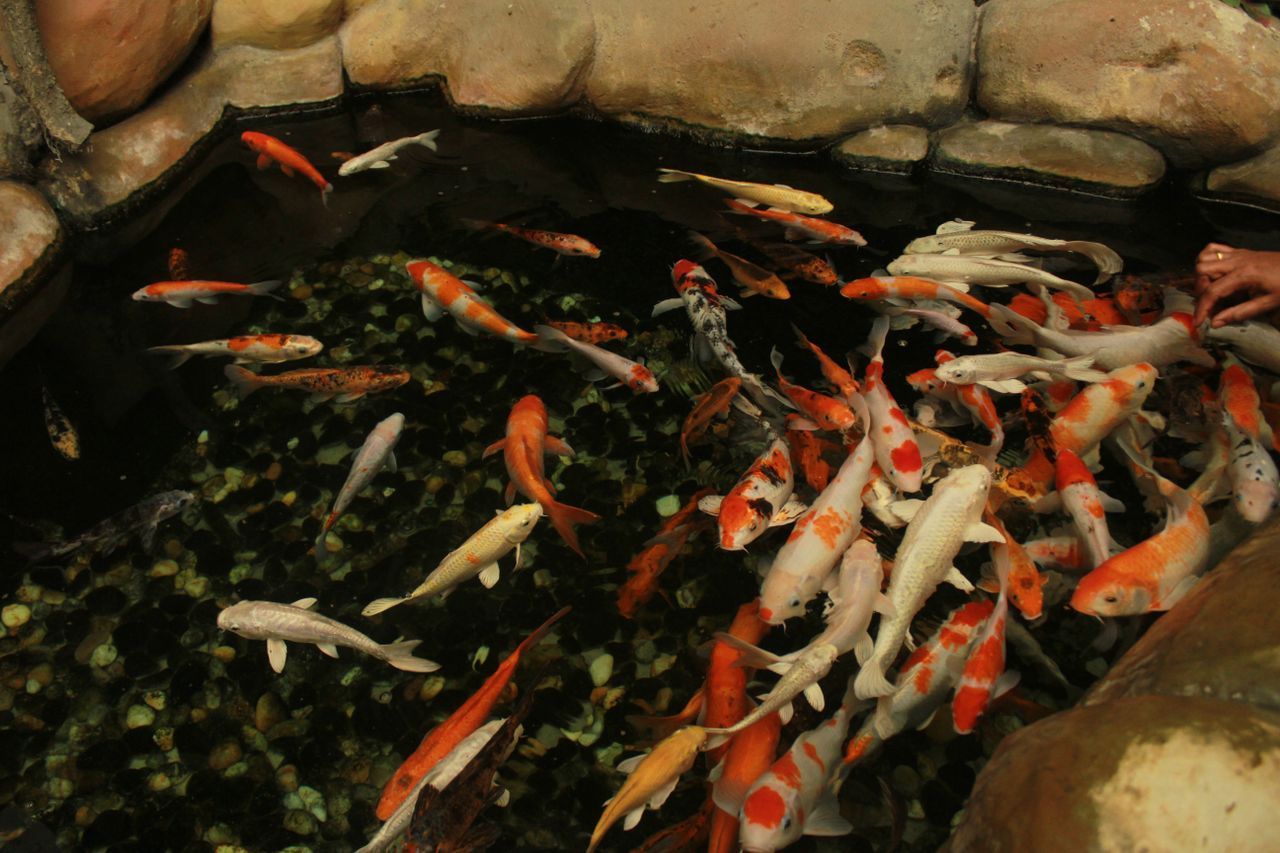
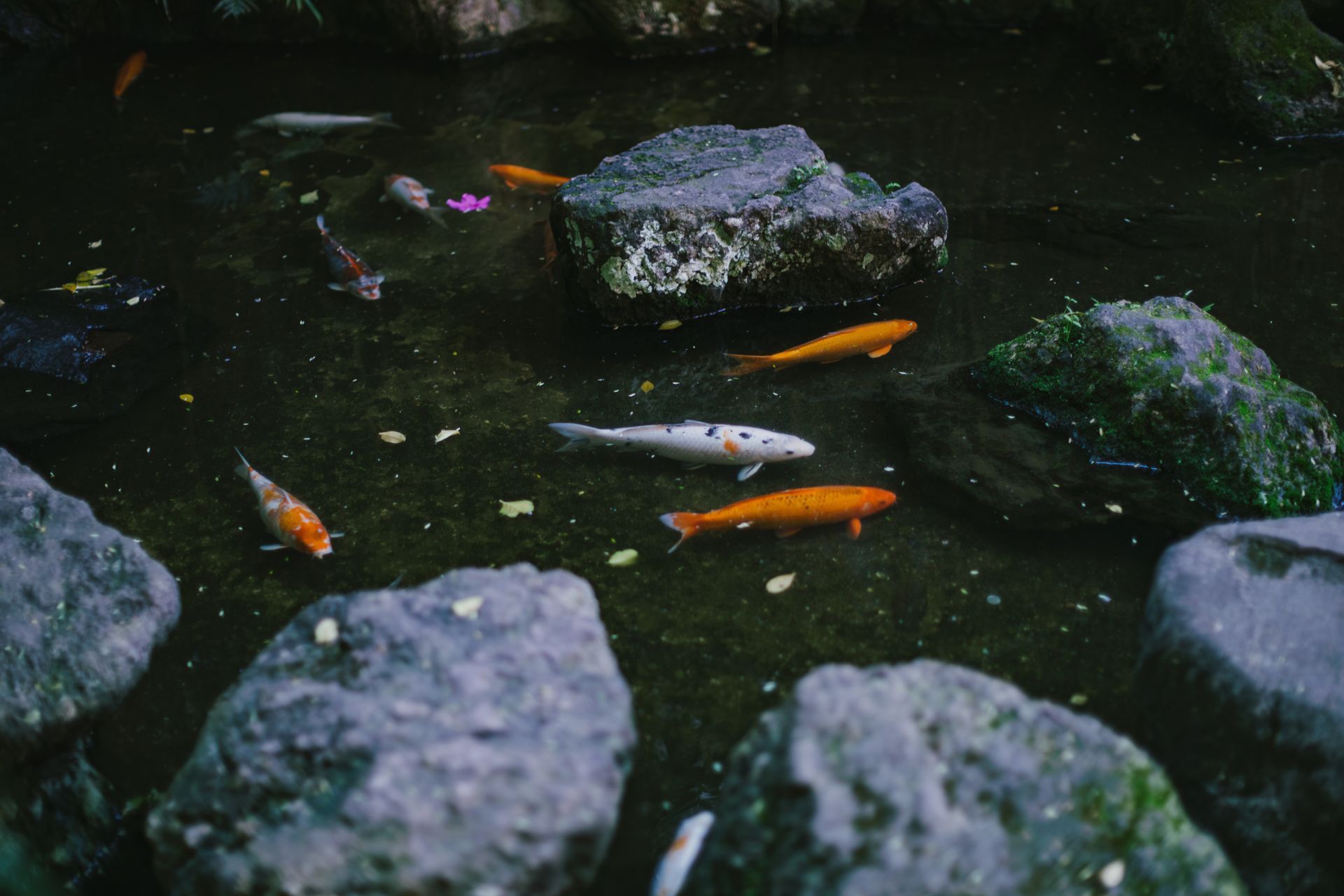
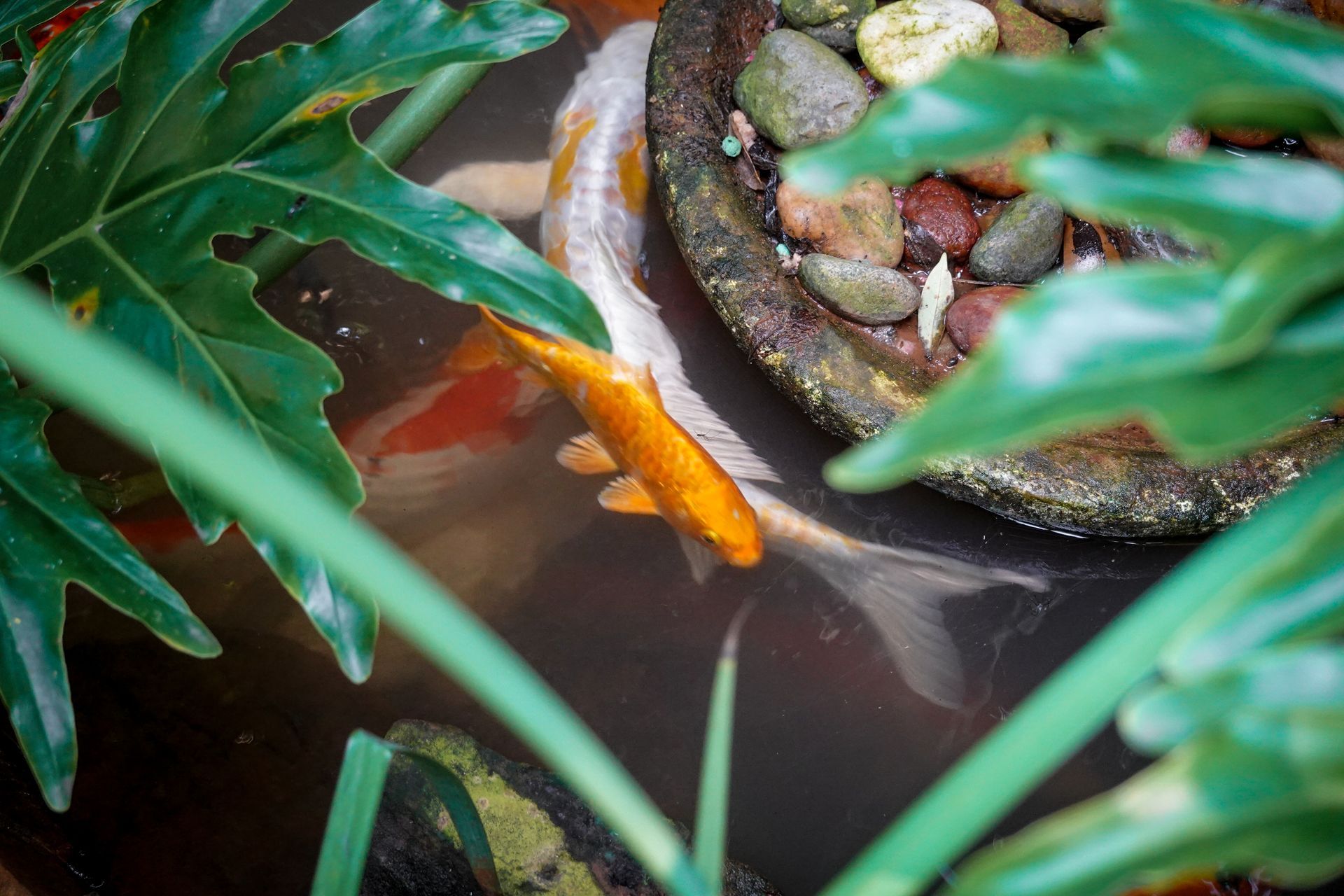
Koi are the moving heart of the pond and often the biggest investment in the system. Their gentle swimming creates small ripples and soft splashes at feeding time. Healthy koi glide at the surface, flash color in the light, and bring the water to life without wild thrashing or stress.
Protecting that investment means keeping their environment stable and clean so they can live for decades in your care.
Bacteria
You cannot see them, but beneficial bacteria are what make a low-maintenance koi pond possible. They convert fish waste into forms that plants can use. This natural cleaning loop means fewer chemical treatments and a more stable, peaceful pond that works with nature instead of fighting it.
When filtration, rocks and gravel, plants, fish, and bacteria are in balance, you get a thriving ecosystem that looks and sounds like it was designed by nature.
Shaping the Water’s Voice Around Your Home
Once the ecosystem is planned, we can tune the water’s “voice” to match your home. Waterfall height, spillway width, and stream length all affect how the pond sounds.
A few ways we shape the sound:
- Taller falls and narrow spillways for a brighter, louder sound that can cover road noise
- Wider, lower sheets of water for a soft, even hush
- Longer streams with small drops for a gentle, flowing murmur
Location matters too. Placing the pond where sound can reach your favorite rooms lets you enjoy it more months of the year. In our Connecticut climate, that might mean:
- Near windows that you open in spring and fall
- Along the side yard where sound can drift to both living room and bedroom
- Close to a patio or deck so outdoor dinners get that natural soundtrack
Moving water does more than sound good. It adds oxygen to the pond, which supports koi health and biological filtration. As the surface dances, it also throws shifting reflections up onto nearby walls, ceilings, and plants. Sitting outside with those reflections and sounds working together feels like being inside a living piece of art.
We also pay careful attention to practical noise. We avoid harsh, high drops that can be tiring to listen to. We use plantings, stone shelves, and varied levels to mellow the sound. Pumps and plumbing are set up so they are quiet and can be serviced without tearing apart the pond.
When evening comes, soft underwater lights along falls and streams pair with the sound of water to create a true backyard sanctuary, not just another yard feature.
Caring for Koi so the Sanctuary Stays Peaceful
A calm pond depends on calm, healthy fish. Koi care does not have to be hard, but it should match the seasons in a place like Connecticut, where water temperatures can range from ice in winter to the high 70s °F in summer.
Feeding and water quality go hand in hand. In warmer months, when water is consistently above about 65 °F, koi are more active and can handle a higher-protein diet. As water cools in fall and slips down into the low 50s °F, feeding should slow down and then pause when temperatures drop low enough that digestion slows (typically around 50°F), so food is not left to rot on the bottom.
In early spring, as water climbs back through the mid‑50s °F, it is smart to start feeding gently with an easy-to-digest, cold‑water food as koi wake up and your filters come back to full strength.
Routine maintenance keeps both sound and water steady. Simple tasks include:
- Emptying the skimmer basket before it is packed with leaves
- Rinsing filter pads as needed, using pond water rather than chlorinated tap water to protect beneficial bacteria
- Glancing at the waterfall or stream flow to be sure it has not changed
These small habits keep your pond feeling like gentle stewardship, not a second job.
Quiet moments by the water are also the best time to check koi health. Notice how they swim, how they eat, and whether their colors look bright. Healthy koi move with smooth, easy strokes, rise to the surface without panic, and help create those soft ripples that make the pond feel alive.
For long-term koi health and to protect your investment, it is wise to:
- Keep an eye on basic water quality, especially ammonia and nitrite, during the first weeks after starting up or adding new fish
- Avoid sudden changes in water temperature or large water changes with very cold or very warm hose water
- Make sure there are deeper areas (often 2 to 3 feet or more, depending on design) where koi can retreat during hot summers and cold winters
In our climate, seasonal prep matters. Spring start-ups get pumps, filters, and bacteria colonies ready for another year of growth. Winter care often includes keeping a small opening in the ice with an aerator or de‑icer so gases can escape while koi rest in the deeper water. This protects both your koi and your equipment so everything is ready to sing again when the ice melts.
With the right planning and gentle, consistent care, your koi pond will remain a calm, steady part of your home, a thriving ecosystem and a backyard sanctuary that feels like it has always belonged there, year after year.
Get Started With Your Project Today
Transform your outdoor space into a peaceful retreat with our custom-designed
koi ponds that are built to thrive for years to come. At PD Waterscapes, we work closely with you to create a pond that fits your property, lifestyle, and budget. If you are ready to explore ideas or schedule a consultation, simply
contact us and we will guide you through the next steps.