Transform Your Backyard Into a Natural Retreat with a Waterfall
The difference between a backyard waterfall that looks natural and one that looks like a pile of rocks with a hose running through it usually comes down to a few design choices. It is not about spending more money or using bigger boulders. It is about how the rocks are placed, how the water moves, and how the feature fits into the landscape around it.
Nature does not stack things in neat rows or send water down in perfectly even sheets, and your waterfall should not either. Getting these details right takes some thought, but the result is a feature that looks like it has always been there.
We design, build, and care for custom ponds, waterfalls, and outdoor water features for homeowners in Connecticut and Western Massachusetts. Spring is one of the best times to start planning, so we want to share the design secrets we use to make a waterfall look like it has always been there, along with some springtime details you will want to think about before you break ground.
Starting with Nature for a Realistic Waterfall Layout
When you want a backyard waterfall that feels natural, the best place to start is with real streams and falls.
Take a walk on a local trail this spring and really look at the water. Notice how it rarely runs in a straight line. It curves and bends. It rushes in some spots, then slows into small pools. Water almost always finds little pauses behind larger rocks, where it can swirl and settle.
Look at how the banks shape the flow. Some stones are half-buried. Some tilt into the hill. Plants lean in toward the water, especially in damp spots. None of it looks even or perfect, yet it all fits together.
That is the feeling we aim for when we plan a layout. We like to:
- Follow gentle curves instead of straight lines
- Create small pockets and pools where water can rest
- Mix fast, splashy areas with calm, glassy spots
Your yard’s natural grades are a big part of this. Even a small slope can be turned into a beautiful set of cascades. We look at where the ground already rises and falls, any small hills, or even existing retaining walls. Those shapes help decide where the waterfall should begin, how tall each drop should be, and where the water should settle.
We also plan around your views. Where do you sit most: the kitchen table, the family room, the deck, or a stone patio? A waterfall should draw your eye from those spots. The main drop might line up with a favorite chair, or the stream might gently curve so it leads your gaze into the yard.
Sound is just as important as looks. A tall, sharp drop will make a stronger splash that can help soften street noise. A lower, wider ledge makes a softer, rolling sound. Many times we design several small cascades instead of one big fall. This creates layers of sound that feel more like a real stream and less like a fountain.
Rock, Stone, and Shape That Feel Like They Belong
The rocks you see are the bones of the waterfall, so they need to look like they belong in your yard and in New England.
Using stone that matches what you already see around your property helps everything blend. If your area has a lot of rounded boulders, a waterfall made only of flat cut stone will feel out of place. If your property has more ledge and outcroppings, very smooth river rock alone can look too soft.
A mix of sizes makes a big difference. We like to blend:
- A few large “anchor” boulders
- Plenty of mid-size stones for ledges and sides
- Smaller rocks and gravel to fill gaps and soften edges
The way the rocks are set is just as important as which rocks you pick. In nature, big stones are not perched on top of the soil; they are buried into it. We tilt larger boulders back into the slope and sink them partway into the ground so they look settled, not placed.
We also avoid perfect patterns. Matching sides, straight lines of rocks, and evenly spaced ledges all scream “built.” Instead, we tuck rocks into the banks, overlap some ledges, and let a few stones break the line of the stream now and then. Those small “imperfections” make the whole feature feel more real.
The streambed itself should have movement. Curves, pinch points, and wider, slower sections help the water dance. When the channel changes width and depth, the water will speed up in some spots and slow down in others. That gives the eye more to enjoy from different angles on your property.
Blending Water, Plants, and Lighting for a Natural Oasis
Rocks and water do most of the work, but plants are what pull everything into the rest of your yard.
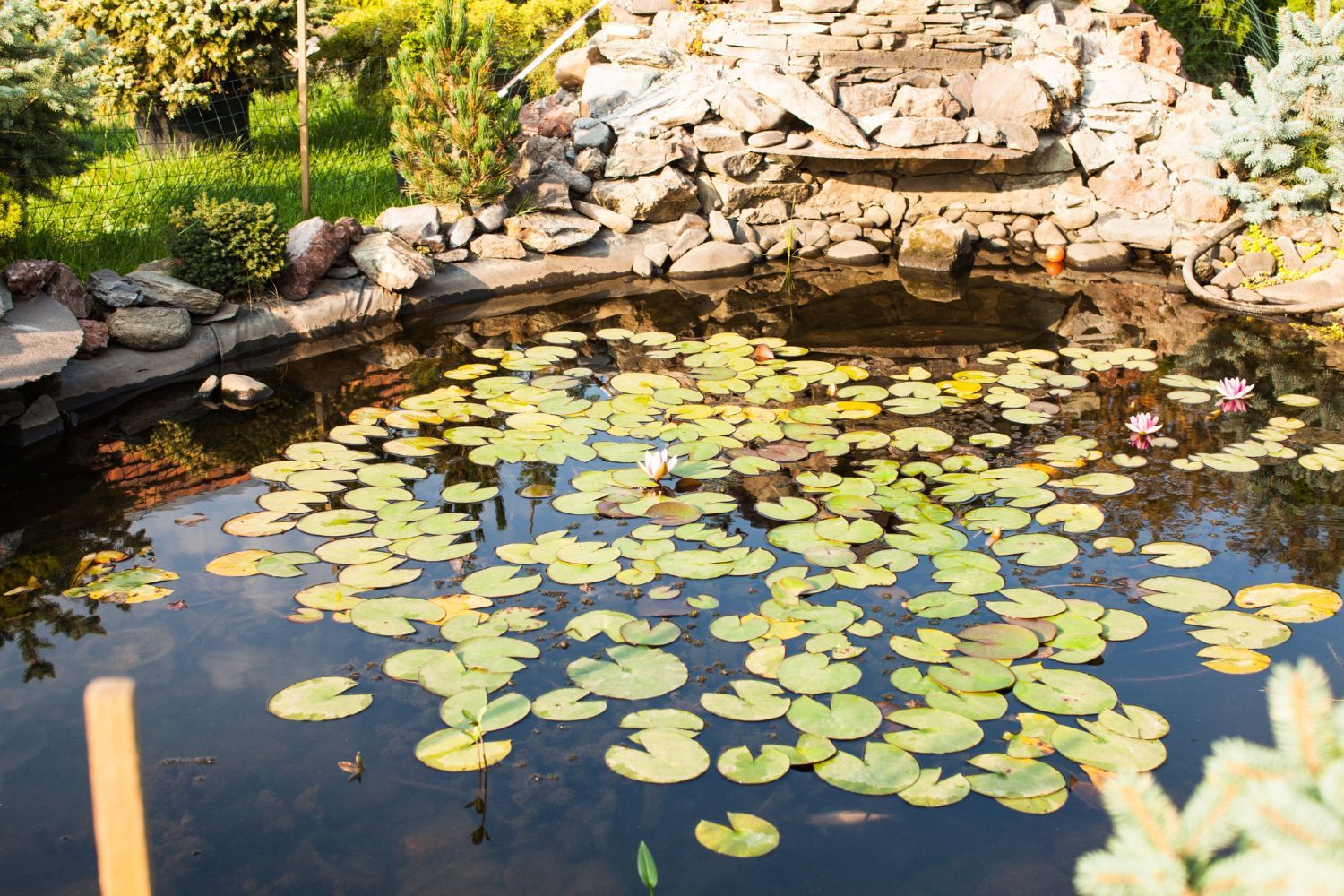
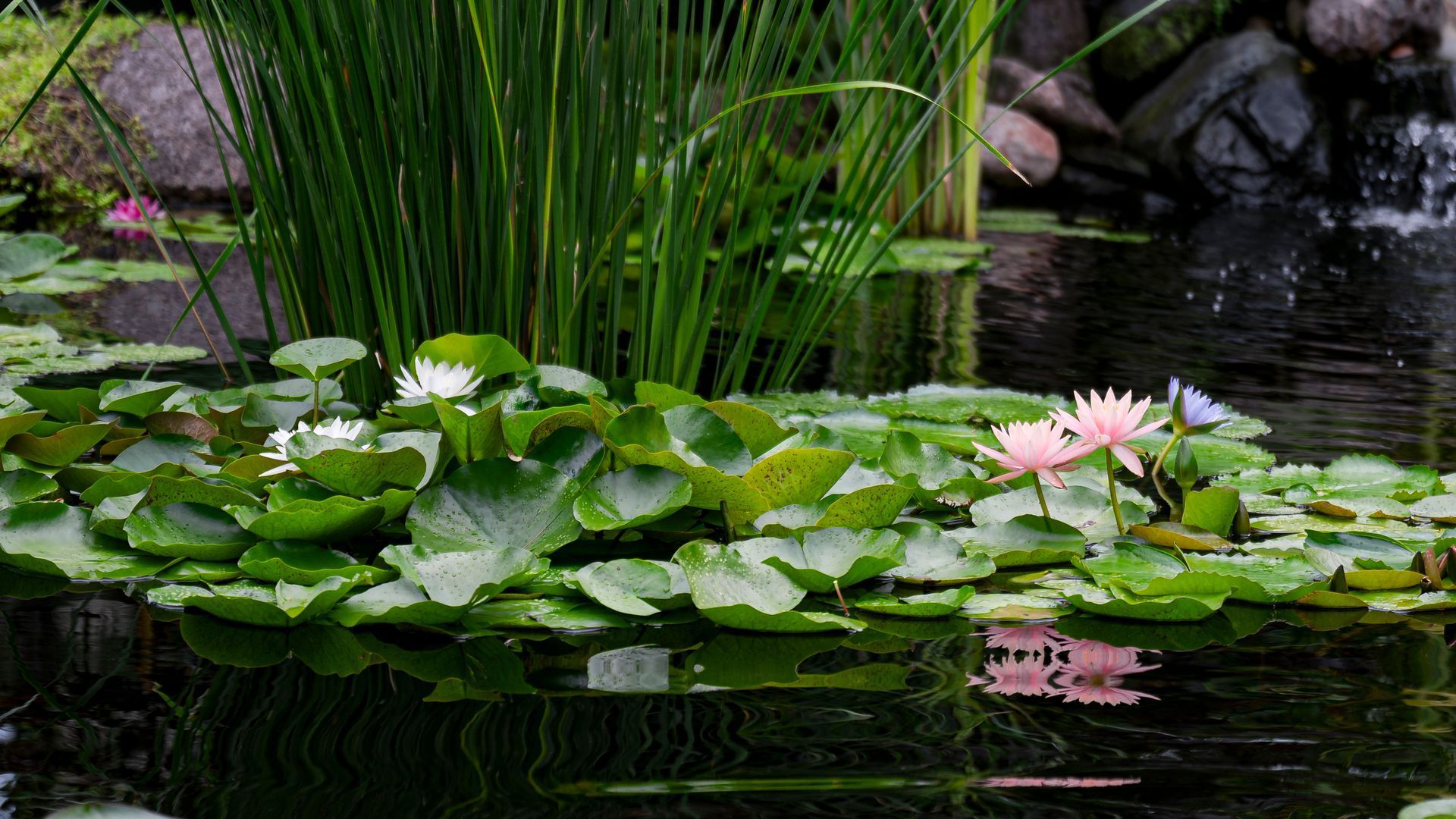
We like to use moisture-loving plants close to the edges to soften the hard stone lines. Groundcovers can spill over rocks. Native perennials can fill in the banks and keep soil from washing away. Taller plants in the back with lower ones near the water help copy what you see along natural streams.
Think in simple layers:
- Taller shrubs and grasses a bit farther from the edge
- Medium perennials closer to the banks
- Low growers and mossy textures right by the water
Since you are likely reading this in spring, it is a great time to think about seasonal interest. You want plants that look good now, while you are excited about your project, not only later. Hardy evergreens can give year-round structure. Early bloomers and fresh spring foliage bring color and life while the rest of the yard is still waking up. Long-season plants help carry that lush feeling well past spring.
Lighting is the final touch that stretches your enjoyment into the evening. Soft, low-voltage lights tucked into the rocks or along the edges make the water glow at dusk. Warm-toned lights feel cozy and calm, not harsh. A few lights set just below or beside the main cascades can catch the movement of the water, so the feature still feels alive even after the sun goes down.
Practical Details Homeowners Often Miss
It is easy to focus on looks and forget the hidden parts that keep a waterfall running smoothly. These behind-the-scenes details make a big difference in how it works day to day.
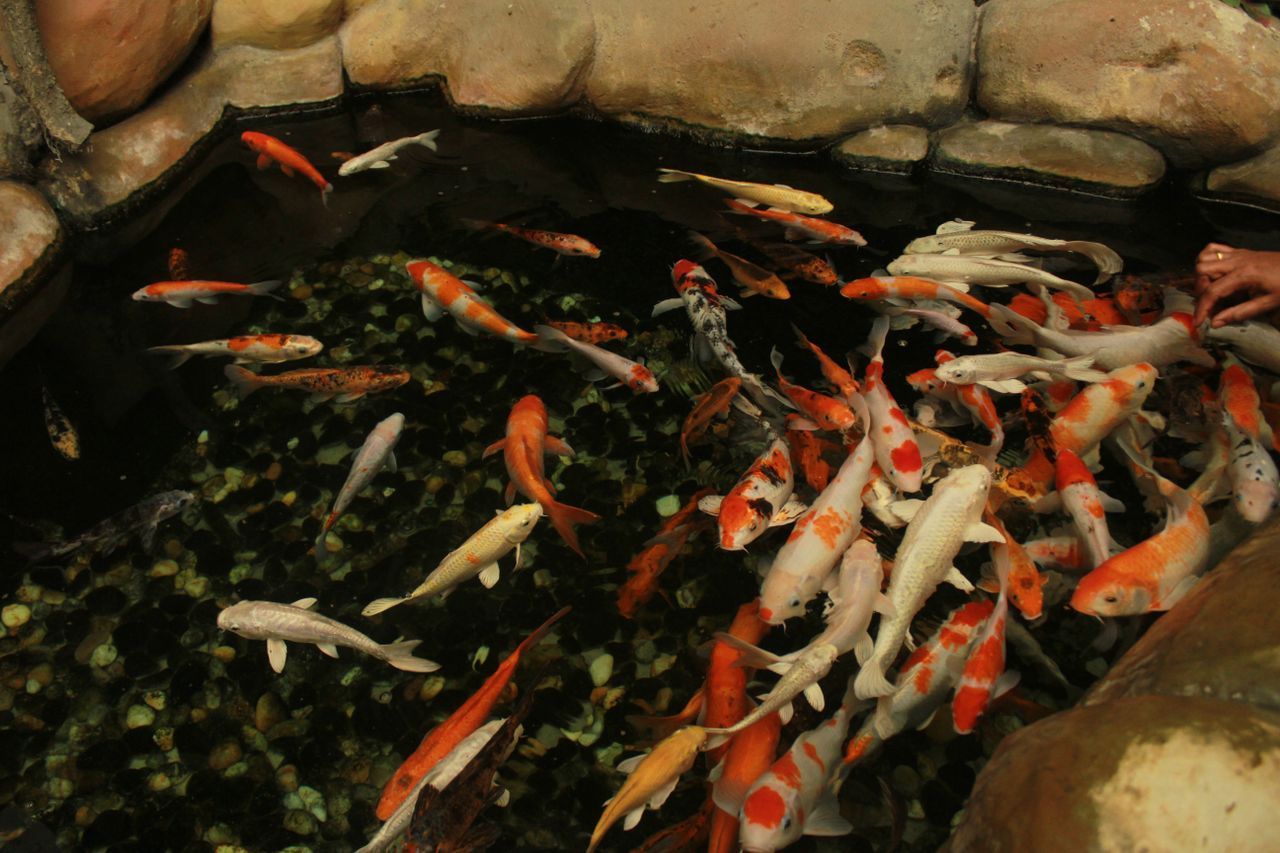
A properly sized basin or pond is key. The reservoir needs enough water so the pump does not run dry as water moves up the falls and back down. A deeper basin can also help keep water temperature more stable and create a better option if you decide to have fish or aquatic plants.
Filtration is another big part of keeping the water clear. Skimmers, biological filters, and carefully planned gravel zones all help remove debris and give good bacteria a place to live. Matching the pump and filter to the size and shape of your waterfall helps avoid weak flow, loud equipment, or constant cleaning.
Since spring is when many homeowners in Connecticut and Western Massachusetts are starting up their systems, it is also a good time to think about care. Basic spring tasks often include checking pumps, clearing out leaves and twigs, and making sure rockwork still sits tight after any freeze and thaw cycles. When we design, we plan access points so maintenance is simpler, and we can set up care plans that fit how much time you want to spend working on the water feature yourself.
Turning Your Natural Waterfall Vision Into Backyard Reality
Early spring is a perfect time to walk your property and imagine how a waterfall could change it. Listen for the spots where neighborhood noise is strongest. Notice where you already like to sit, and where your favorite window views are. Those are clues to where a waterfall will have the most impact on your daily life.
Gather a few inspiration photos, make a simple wish list, and think about what matters most: sound level, wildlife, views, or low upkeep. Then it helps to work with a professional who understands both the artistic side of a waterfall and the technical parts that keep it healthy and clear.
At PD Waterscapes, we focus on custom ponds, waterfalls, and water features for homeowners in Connecticut and Western Massachusetts, and we design with New England’s seasons in mind. We enjoy shaping water, rock, plants, and light so they feel like they were always part of your yard, and so you can enjoy that quiet, stream-like sound every time you step outside.
Transform Your Yard Into A Relaxing Escape
If you are ready to bring the sound of flowing water into your outdoor space, we can design and build
a waterfall that fits your home and lifestyle. At PD Waterscapes, we focus on low-maintenance features that look natural and feel calming every day. Tell us about your vision and we will guide you through options, costs, and timelines. If you would like to talk through ideas or schedule a consultation,
contact us today.