Reading the Water Beneath the Reflections
Clear water, friendly koi, and the sound of a steady waterfall all make a backyard pond feel safe and healthy. But the most important parts of pond health are invisible, hiding in the water chemistry that your eyes cannot see.
At PD Waterscapes, we design ecosystem ponds in Connecticut that are meant to look like they always belonged there. For that natural look and long-term stability, simple at-home tests for pH, KH, ammonia, and nitrite are like checking the pond’s pulse. These “vital signs” tell you how your koi are really doing, how strong your biological filtration is, and why algae control might feel easy one month and harder the next. Once you know what each test means, you can read your water like a story and keep that backyard sanctuary calm and clear through changing seasons.
What Your Pond Water Is Trying to Tell You
A thriving ecosystem pond is not just a big hole of water. It is a living system with five key pieces working together:
- Filtration that moves and cleans the water
- Rocks and gravel that give bacteria a home
- Aquatic plants that soak up extra nutrients
- Fish that bring color, motion, and also produce waste
- Beneficial bacteria that turn that waste into safer forms
When all five are in balance, your pond is “designed by nature.” Water tests do not replace this design; they simply confirm that everything is working the way a healthy stream or wetland would.
Seasonal shifts in Connecticut put extra pressure on this balance. In fall, leaves drop into the pond, nights get cooler, and koi feeding often changes. All of that affects what is happening in your water, even if it still looks clear. Regular testing around these changes connects the numbers to what you see every day, such as:
- Water that stays clearer for longer
- Less string algae hanging from rocks
- Fish that swim calmly and eat with a steady appetite
- A waterfall that smells fresh, not “pondy” or stale
Once you understand the chemistry, those small daily observations make a lot more sense.
pH and KH Basics for a Stable Backyard Sanctuary
pH is simply a measure of how acidic or basic your pond water is. For koi and other pond life, a comfortable range is usually around 7.0 to 8.5. The exact number matters less than keeping that number steady. Fish and beneficial bacteria do not like big swings.
KH, or carbonate hardness, is the part of your water that keeps pH from bouncing around. We often call it the “shock absorber” of pond chemistry. A good KH level helps:
- Protect koi from sudden pH drops
- Keep biological filters running smoothly
- Support natural bacteria that break down fish waste
Most homeowners use simple test strips or a basic liquid kit. Both will give you a color chart and a few easy steps. You can:
- Test pH and KH once a week during temperature swings, less often in steady weather
- Take a sample away from the waterfall, not right at the falls where mixing is strongest
- Match the color to the chart without obsessing over tiny shade differences
Stone placement, buffering rocks, and even the natural geology under your yard can help keep KH stable over time. That is one reason a well-designed pond can feel like it always belonged on your property: the water chemistry settles into a stable pattern that fits the site.
As water cools in fall, koi immune systems slow down and bacteria in your filters work at a different pace. This is when stable pH and KH are extra important. Strong buffering means fewer surprise swings at a time when fish are less able to handle stress.
Ammonia and Nitrite: Invisible Threats to Koi Investment
Ammonia is produced every day in your pond. It comes from fish waste, uneaten food, and decaying leaves or plant material. In a healthy ecosystem, beneficial bacteria living in your rocks, gravel, and biofalls convert ammonia to nitrite, then another group of bacteria converts nitrite into nitrate, which is much safer and can be taken up by plants.
Even low levels of ammonia and nitrite can cause trouble for koi. They can irritate delicate gill tissue, reduce oxygen uptake, and weaken long-term health. If you think of your koi as living investments, these two tests are like insurance.
With simple at-home liquid kits, you want to see:
- Ammonia at or very close to zero
- Nitrite at or very close to zero
If either number climbs, your pond is telling you that something in the five-part ecosystem is out of balance. Maybe:
- There is too much fish load for the current filtration
- Rocks and gravel are clogged with debris and need careful cleaning by a professional
- Plants are not pulling enough nutrients
- Filters or biofalls are not getting the flow they need
Fall brings special risks. Heavy leaf drop adds sudden organic load. Many pond owners also give a few “last big meals” before reducing feeding for cold water. Those extra nutrients can spike ammonia and nitrite quickly. Testing this time of year helps you catch problems before they show up as stressed fish or cloudy water.
Using Test Results to Guide Algae Control and Care
Algae is not just a green mess on the rocks. It is often a sign that your water chemistry is feeding more growth than your plants and bacteria can keep up with. Excess nutrients, unstable pH, or stressed biological filtration all give algae an easy opening.
Your test kit becomes a simple guide for gentle, natural corrections. For example:
- If ammonia or nitrite climb, reduce feeding and have a professional check your filtration
- If KH is low, discuss safe buffering options to steady pH
- If nitrate is high, adding or boosting plants can help pull nutrients out of the water
Good algae control in an ecosystem pond is less about harsh chemicals and more about small nudges that bring the system back into balance. Often that means:
- More shade and nutrient uptake from marginal plants
- Stronger circulation from the waterfall and stream
- Better pre-filtration so debris never gets deep into the rocks
A simple seasonal checklist for Connecticut ponds might include:
- Weekly tests during spring and fall temperature swings
- Monthly tests in stable summer weather
- Extra testing after big storms, heavy rains, or major leaf drops
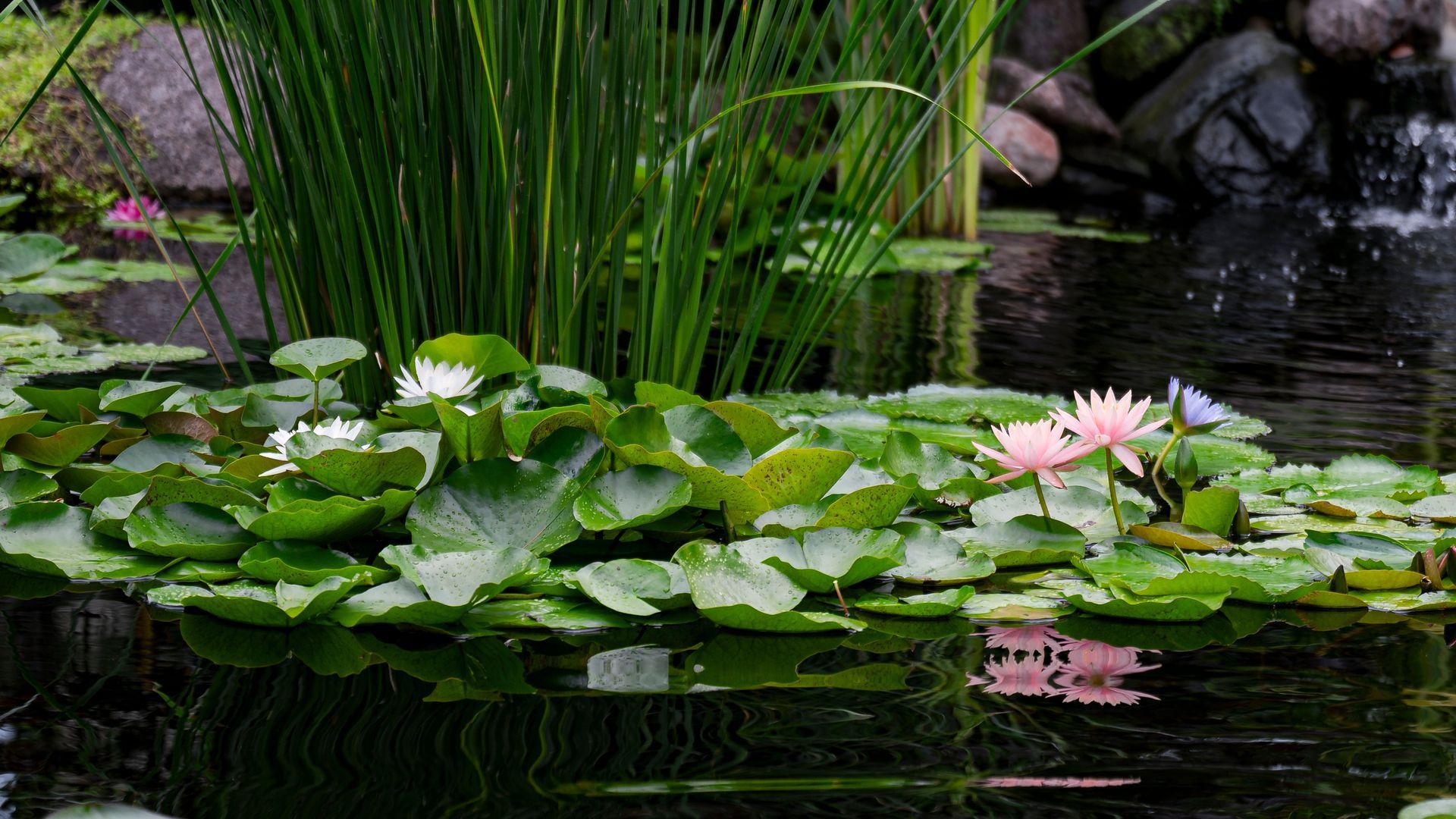
When the chemistry is right, you can see and hear the difference. Water looks clearer, reflections of sky and trees sharpen, and the sound of the waterfall feels bright and clean, a sign of good oxygen and healthy flow.
Turning Simple Tests Into an Autumn Pond Ritual
Taking five minutes to test your water can become a relaxing ritual. You scoop a small sample, compare a few colors, and in that short time you are also slowing down, watching your koi glide, and listening to the waterfall. It is a quiet way to stay in touch with the health of your backyard sanctuary.
Those fall test results can also guide smart planning. Maybe you notice that KH drops every year at the same time, or that ammonia hints upward when leaf debris is heaviest. That information helps you plan small upgrades for the next season, like a few more nutrient-hungry plants, a change in fish load, or improved stone placement to add both beauty and surface area for bacteria.
At PD Waterscapes, we see every ecosystem pond as a living story. pH, KH, ammonia, and nitrite are just four important characters in that story. When their “lines” are steady and healthy, koi live longer, algae control feels more natural, and your water feature keeps looking like it has always belonged in your Connecticut backyard through every season of the year.
Get Started With Your Project Today
If recurring algae is taking the enjoyment out of your pond or water feature, we are ready to help you restore balance and clarity. Our professional
algae control services are tailored to your specific water system so you get results that actually last. Reach out to PD Waterscapes so we can evaluate your needs and recommend a maintenance plan that fits your goals and budget. To schedule a consultation or ask questions, simply
contact us today.