Cultivating Pond Plants That Make a Koi Pond Feel Decades Old
A koi pond can feel like it has always belonged in your yard when rock, water, and pond plants all work together. When the plants spill over stones, soften the water’s edge, and move gently in the current, a new pond can look like it has been shaped by time instead of installed last month.
At PD Waterscapes, we focus on ponds that act like living streams, not just holes in the ground with fish. In this article, we will walk through how pond plants help build that "designed by nature" look, support clear water, and keep koi safe and comfortable in a true backyard sanctuary and thriving ecosystem.
The Five Elements of a Thriving Koi Ecosystem
A pond that feels decades old starts with how it functions, not just how it looks. When the ecosystem is in balance, the surface is calm but alive, and everything seems to belong.
In a healthy koi pond, five elements work together like a living machine designed by nature:
- Filtration, Biological filtration uses helpful bacteria to break down fish waste and extra nutrients so they do not cloud the water or stress the fish.
- Rocks and Gravel, Stone and small gravel protect the liner, create natural shorelines, and offer a huge amount of surface area where those bacteria can live.
- Pond Plants, Aquatic plants absorb excess nutrients, shade the water, and provide cover for fish and wildlife.
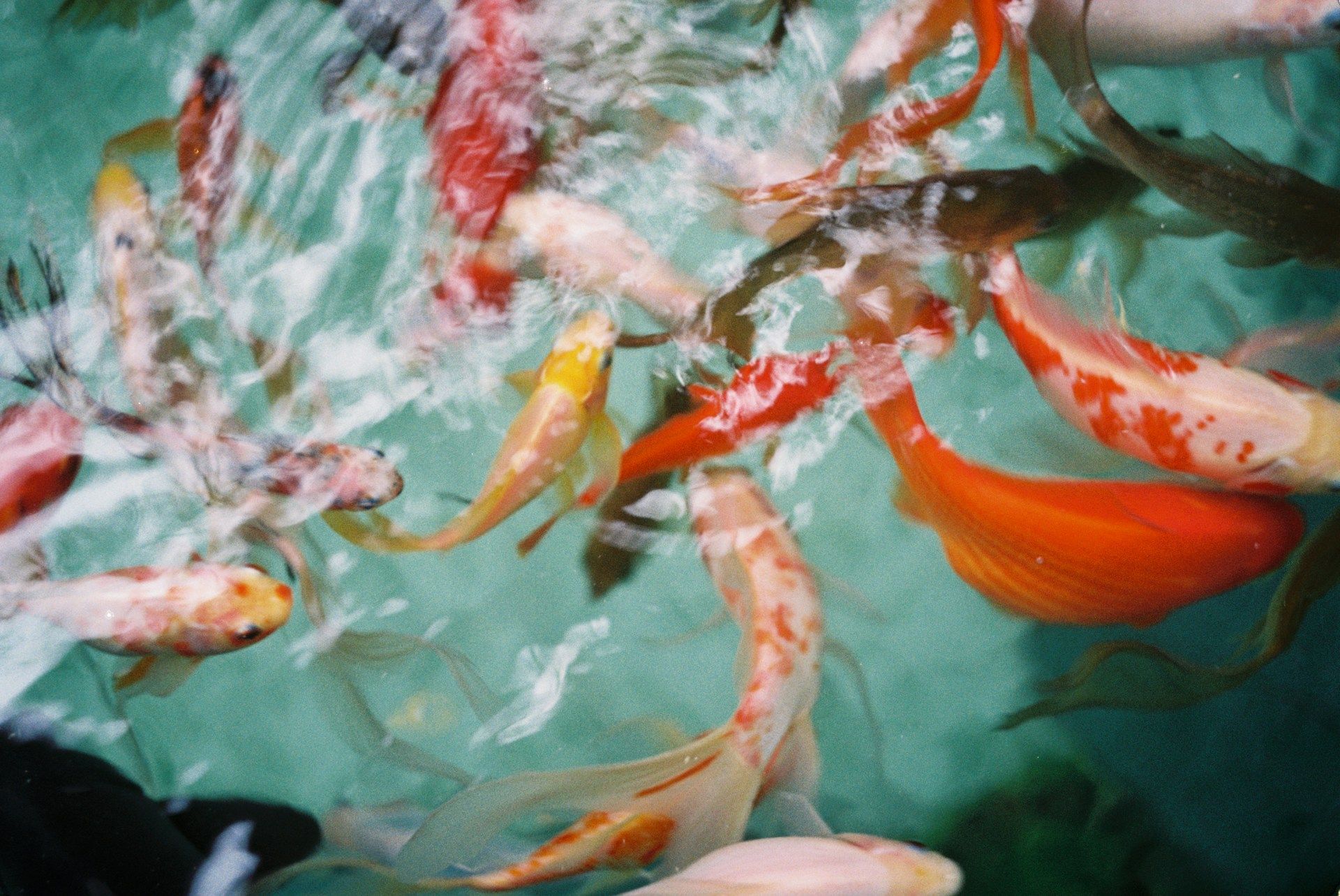
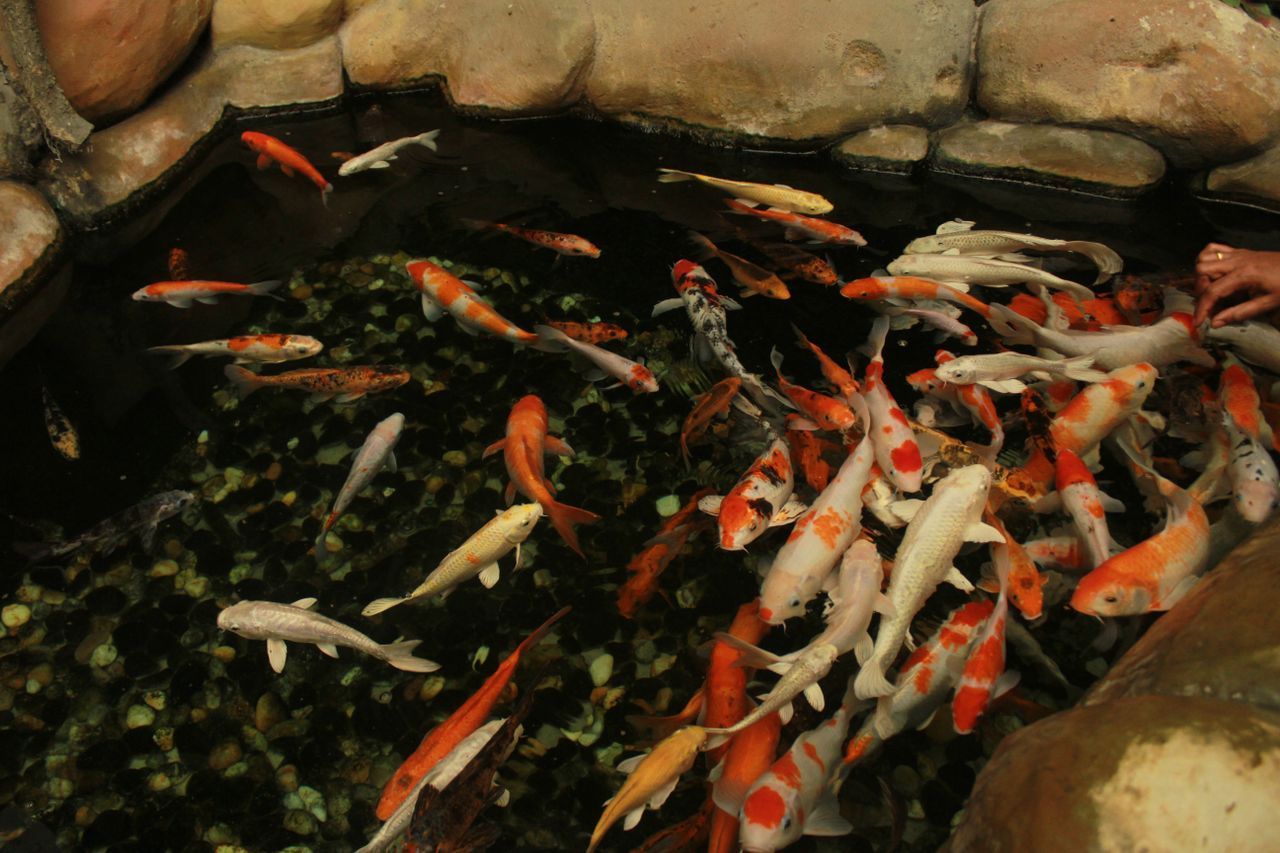
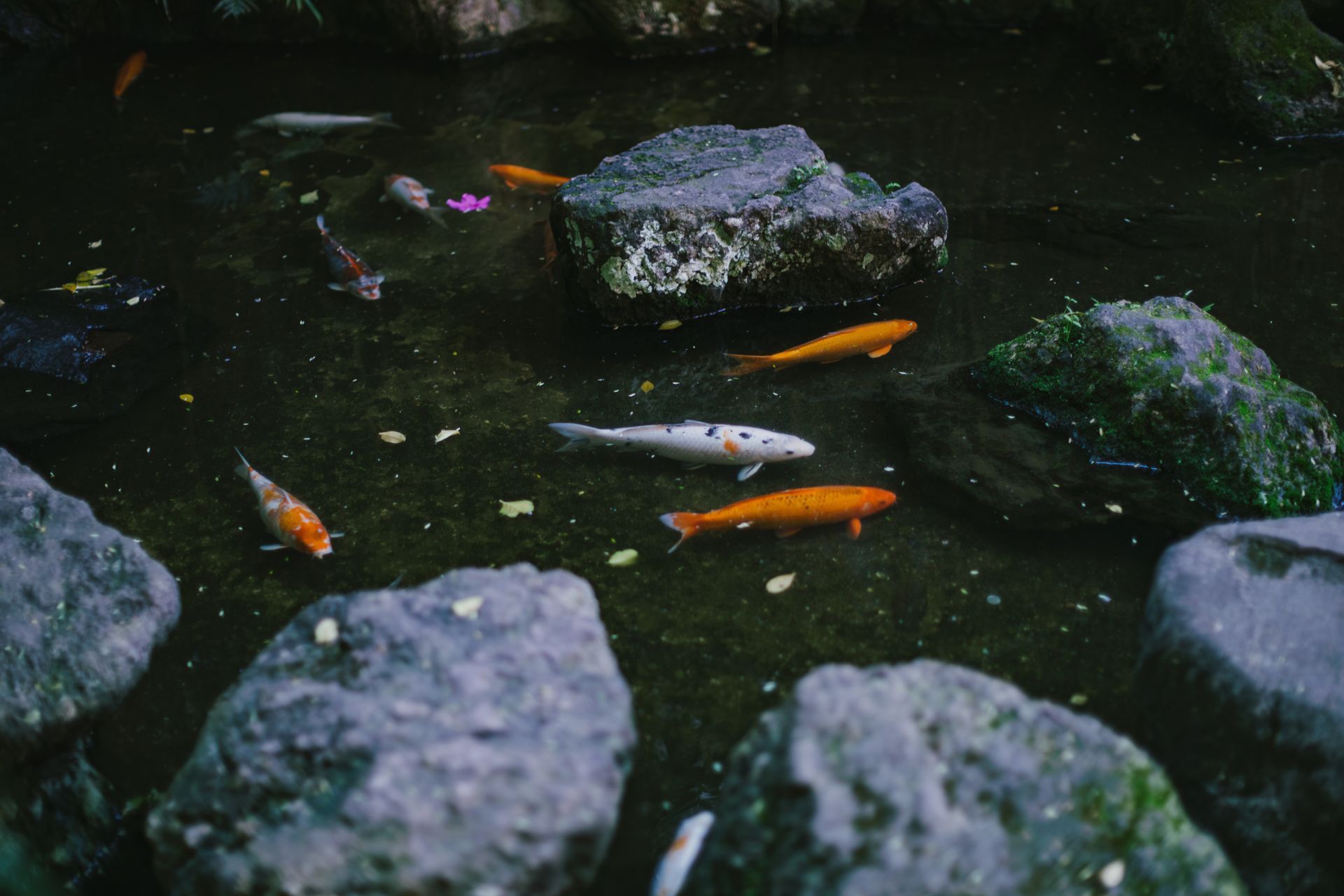
- Fish, Koi are more than decorations; their movement, grazing, and waste all influence how the pond ecosystem behaves.
- Bacteria and Micro-Life, Invisible colonies of bacteria, tiny invertebrates, and soft algae films knit everything together, turning a simple water feature into a self-sustaining, biological filtration system.
Filtration and water flow are the first keys. Biological filtration uses helpful bacteria to break down fish waste and extra nutrients. Those bacteria live:
- In the filter system
- On rocks and gravel
- On plant roots and stems
Moving water keeps oxygen levels up so koi, plants, and bacteria can all "breathe." A well-planned stream or waterfall also keeps the surface from getting stagnant and helps the pond sound and feel alive.
Stone and gravel are the quiet workers. They do much more than decorate. Rock and small gravel:
- Add huge amounts of surface area for bacteria
- Protect the liner and shape natural shorelines
- Help a new pond look like it was carved by water and weather
Then we have plants, fish, and that web of bacteria and micro-life all working together. Pond plants grab extra nutrients before algae does, shade the water, and give cover for insects and amphibians. Koi stir the bottom, nibble on roots and algae, and keep some plants from growing too fast. In between it all, there is an invisible network of bacteria, small invertebrates, and soft algae film that makes the pond feel like a living system instead of a water feature on life support.
Choosing Pond Plants That Look Like They Always Belonged
To get that "always been there" aesthetic, we like to layer pond plants just like you would see along a wild New England or Northeastern stream, while still working beautifully in backyards across the U.S. with similar climates.
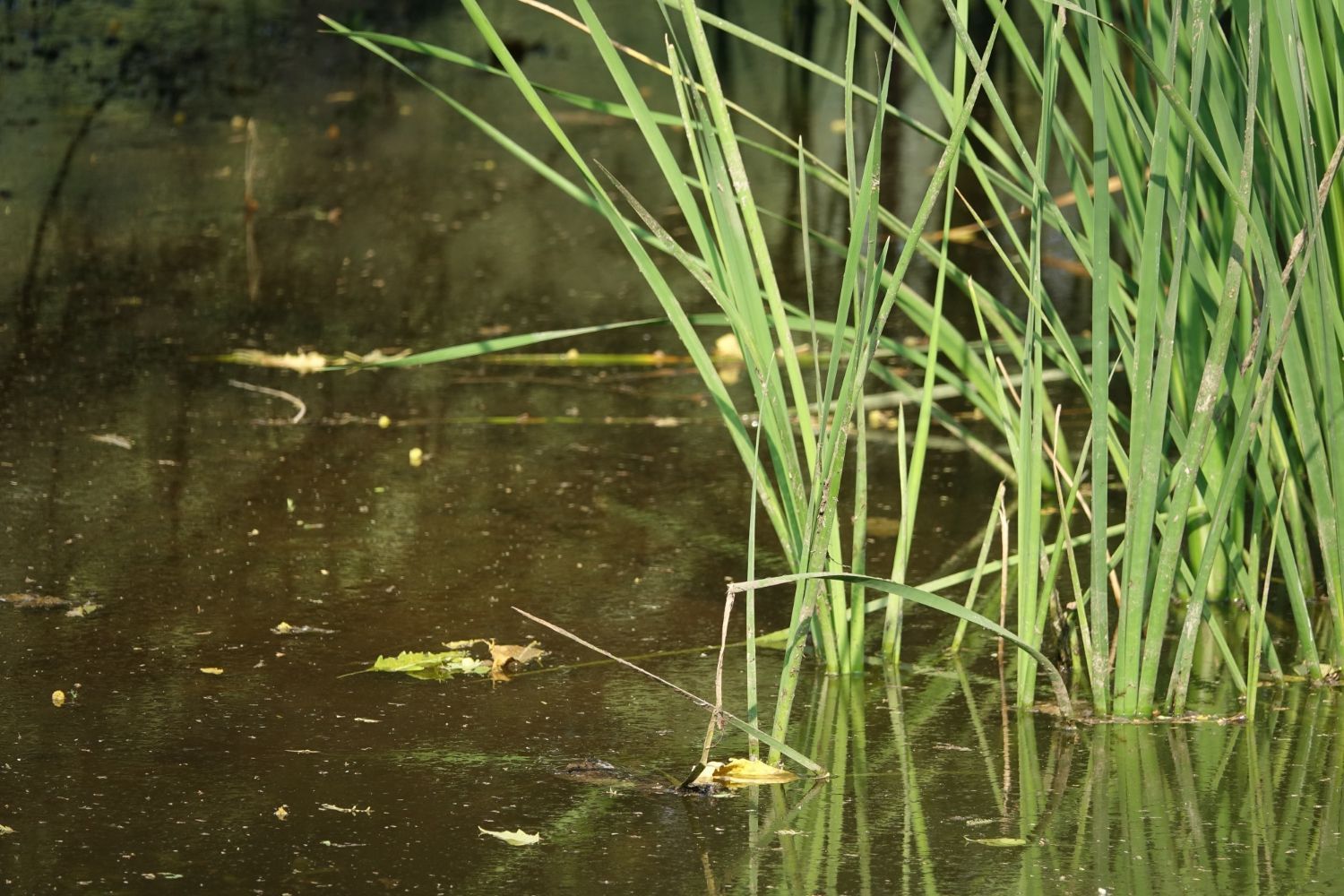
Around the water’s edge, marginal plants love to grow in about 2 to 6 inches of water. Good choices include pickerel rush, soft rush, and dwarf cattails. Planted in loose, irregular clusters, they break up a straight edge and blur the line between land and water. If everything is in a neat, even row, the pond screams "just installed." When plants are staggered and mixed, it feels older, softer, and as if it has always belonged.
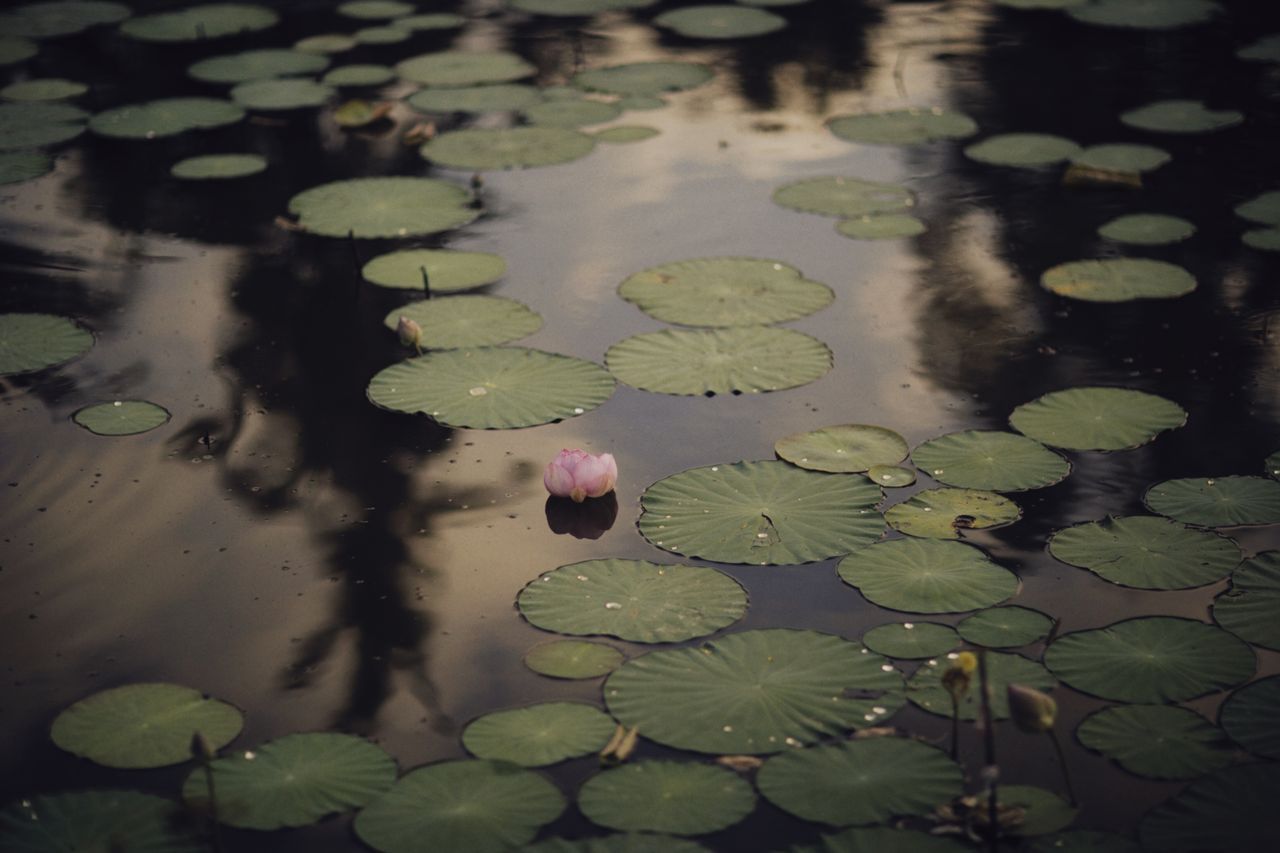
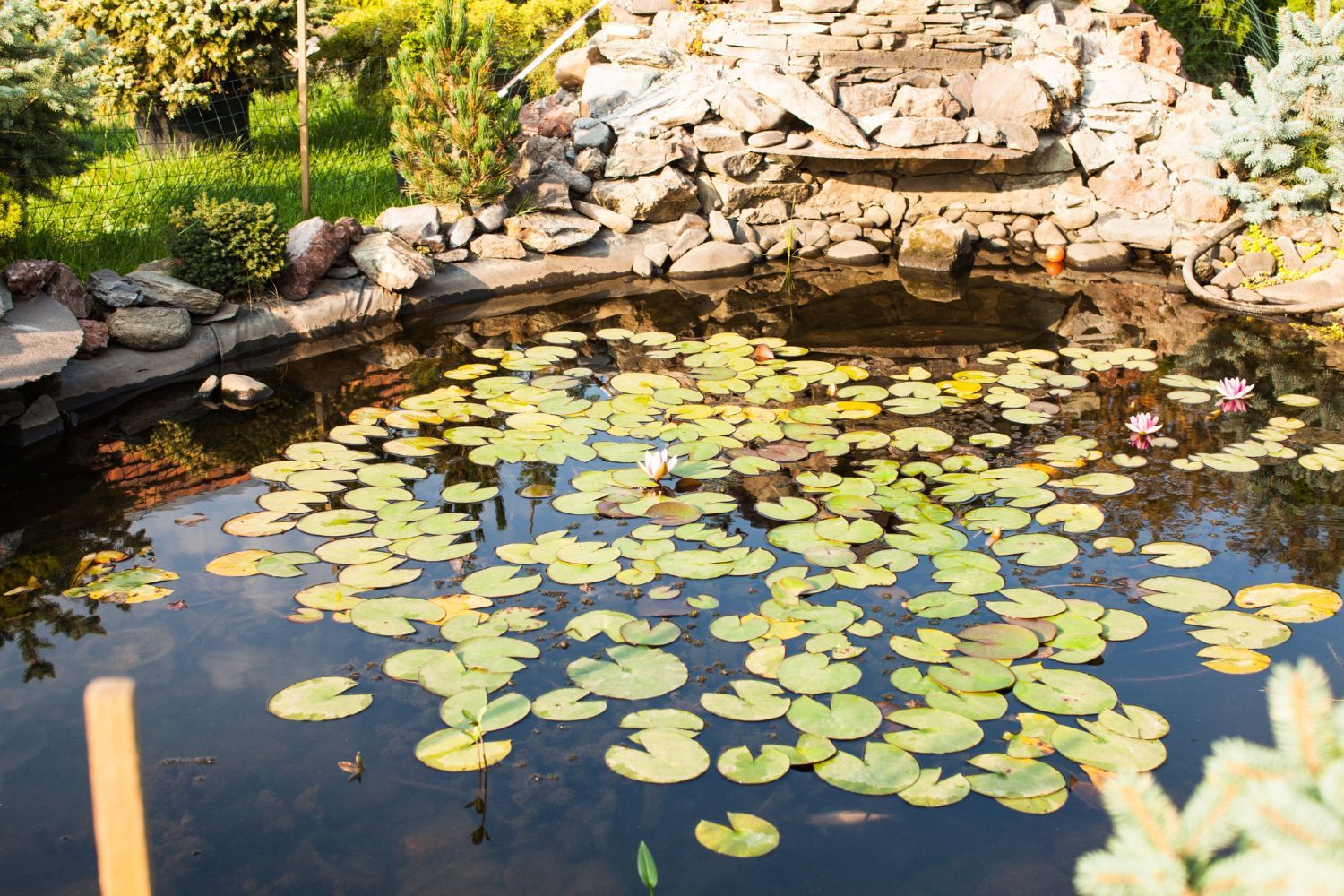
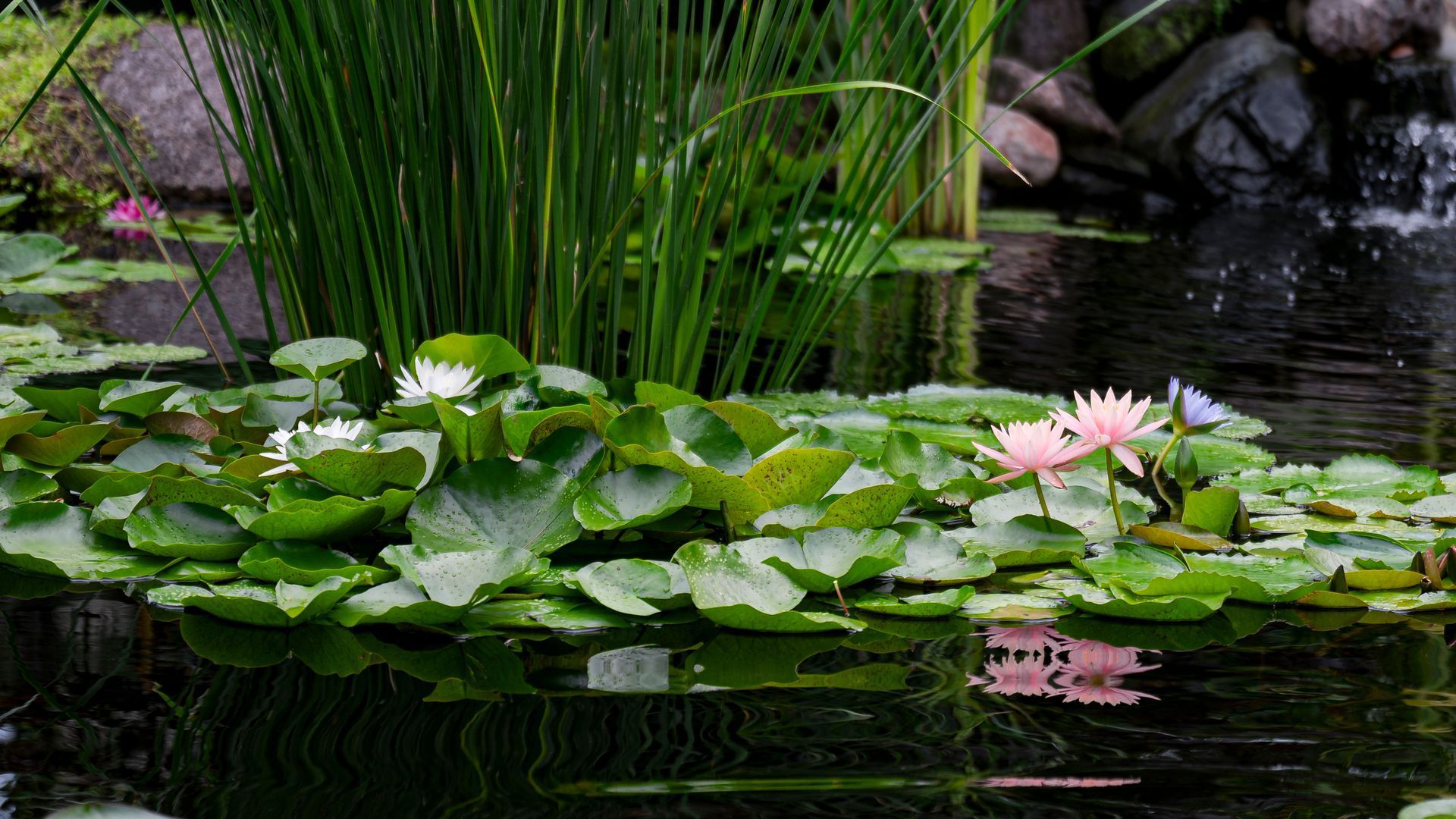
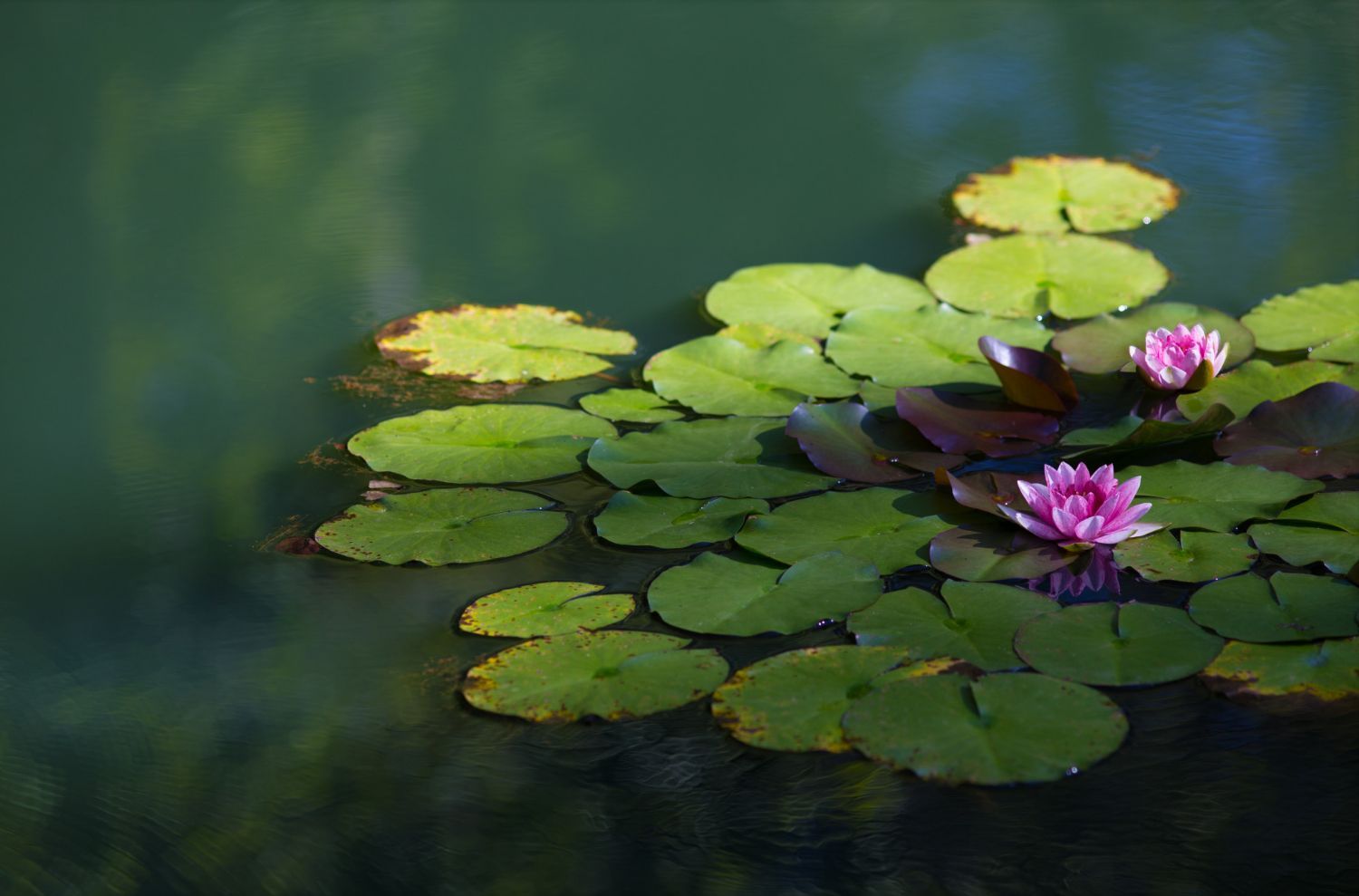
In deeper areas, lilies and other deep-water plants grow in about 12 to 24 inches of water. Their floating leaves:
- Cast shade for koi
- Calm the surface so reflections are clearer
- Help cool the water on hot days
Floating plants, such as water lettuce where it is allowed, can give a wild pond feeling and help eat up nutrients that would otherwise feed algae in summer.
We also like to mix native and "native-looking" plants that fit a Northeastern palette. Blue flag iris, arrowhead, swamp milkweed, and sweetflag all give a natural shoreline look and support local pollinators. The key is to pick varieties that fit the size of your pond and will not take over or escape into nearby wetlands. In other regions of the U.S., we take the same approach, choosing plants that look like they were always part of the local landscape while still protecting nearby waterways.
Planting for Koi Comfort, Safety, and Long-Term Health
Healthy koi are part of the design. When we plan pond plants, we think about how the fish feel, not just how the pond looks. A well-planted, balanced pond protects your koi as an investment as well as a living part of your backyard sanctuary.
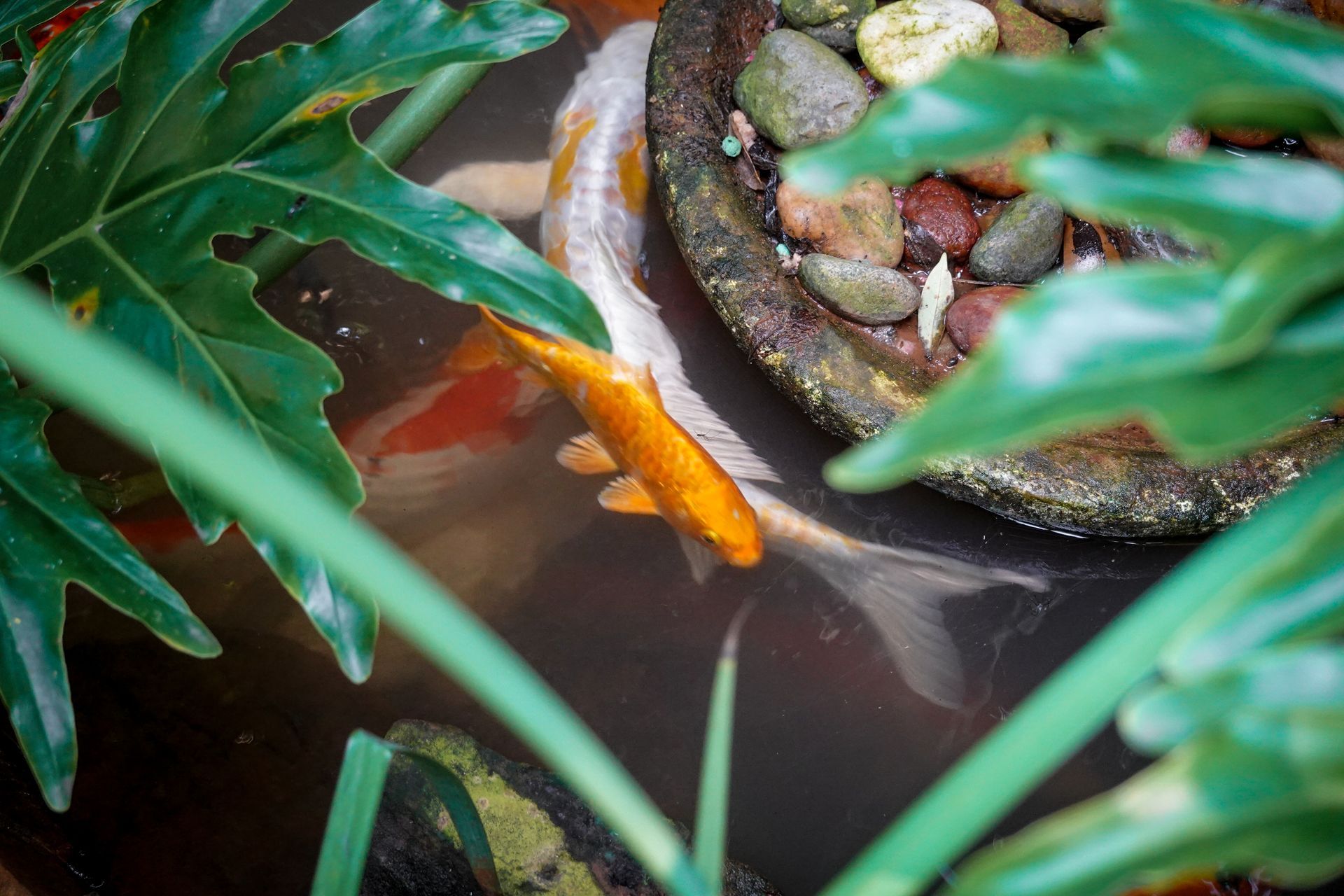
Shade and cover reduce stress for koi. Broad leaves from water lilies, tall marginals, and overhanging foliage help keep pond water from climbing into the mid-80s Fahrenheit. Cooler, shaded water holds more oxygen and is easier on koi over the long term. Shade also gives koi places to hide from birds and other predators.
Since koi are hungry and curious, some plants stand up better than others. Hardy lilies, iris, and rushes usually hold their own. Softer, leafy plants can get chewed down fast. To protect roots from digging and nibbling, we often:
- Tuck plants into pockets between larger rocks
- Use planting baskets hidden in gravel
- Create shallow planting shelves that koi seldom reach
For additional protection, many homeowners add a few larger boulders, floating logs, or plant thickets to break up open water. These features give koi quick hiding spots if a heron or raccoon stops by.
Seasonal care matters in cooler climates like New England. Late in the growing season, trimming back dead leaves, thinning aggressive plants, and moving hardy varieties to deeper zones, often 18 to 24 inches or more, helps them overwinter below the ice line. In milder regions, the same idea applies: keep decaying plant material out of the water and make sure roots are at a safe depth for local winter temperatures. As these plant colonies mature year after year, they act like a steady anchor for water quality, smoothing out swings in temperature and nutrients that can stress koi.
Designing Stones and Plants to Age Gracefully Together
If you look closely at a natural pond, you will see a story along the shoreline. Rocks are never lined up like a necklace. They are half-buried, tipped at angles, and wrapped by roots and grass. Plants lean out over the water, not away from it.
We read that story and repeat it in backyard ponds. That means mixing:
- A few larger boulders that look "sunken" into the soil
- Medium stones that step down into the water
- Gravel and small cobble that soften the base
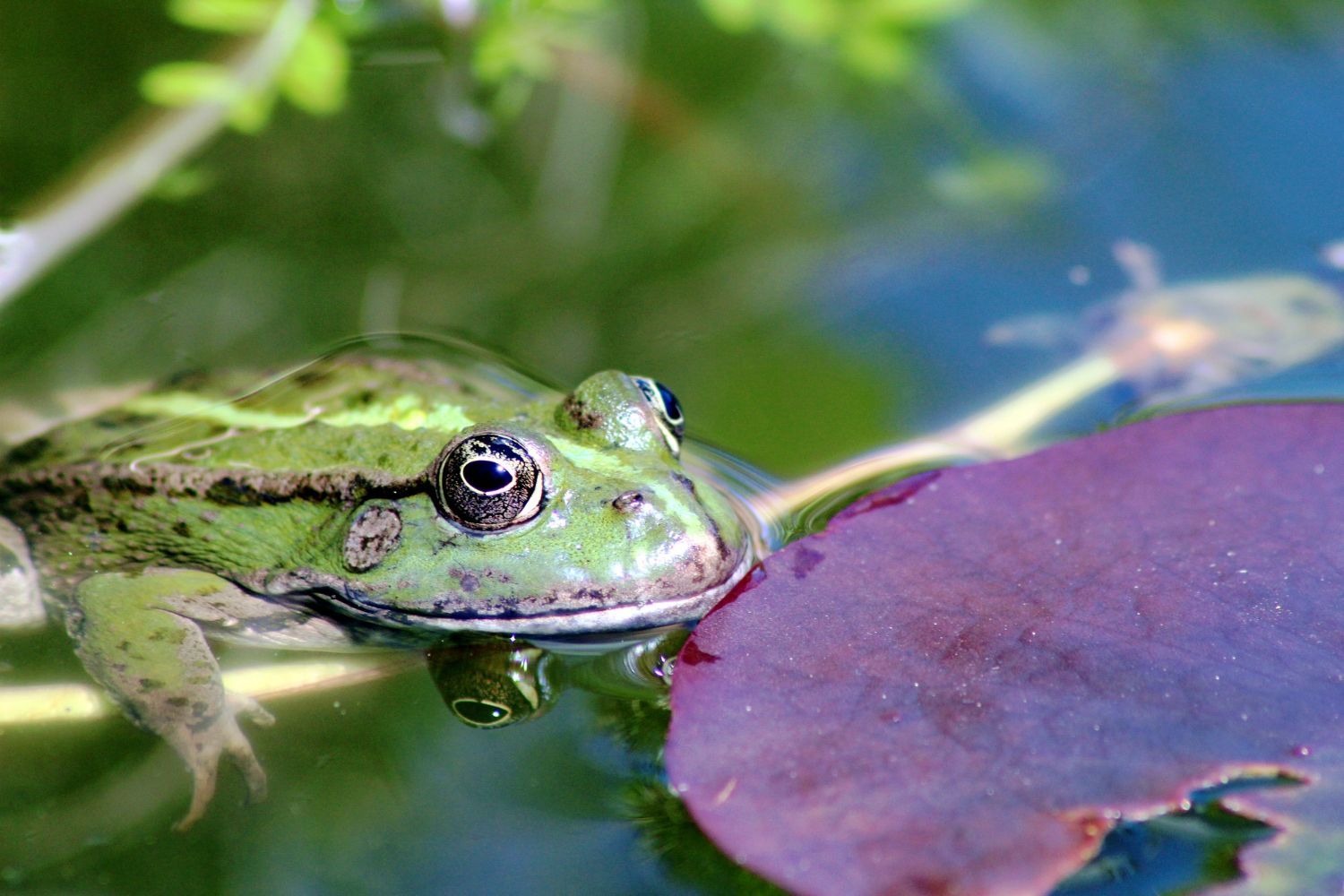
Then we tuck pond plants into rock crevices, place a piece of driftwood here and there, and stagger rocks to create small pockets of still water next to trickling flows. Frogs, dragonflies, and songbirds quickly find these micro-habitats, which makes the pond feel less like a built object and more like a small wild place.
Over time, rocks near splashing water take on a patina. Moss, liverworts, and natural color staining appear on damp surfaces. We like a bit of "controlled wildness," such as self-seeding plants in a few cracks and soft overhangs of grass and iris. That slight messiness is what makes a pond look like it has a past and helps your new water feature feel as though it has always belonged in the landscape.
Using Water Movement and Plants to Enrich the Senses
A koi pond should feel good as well as look good. Water movement and pond plants work together to create a full sensory experience.
Waterfalls and streams add sound and oxygen. As water tumbles over rocks, it breaks into small droplets, increasing the surface area where air and water meet. This simple act, like a miniature mountain stream, oxygenates the pond and supports the biological filtration that keeps your koi healthy.
By changing drop heights and stone placement, we can shape different soundscapes, from a gentle trickle near a sitting area to a deeper rush that helps mask neighborhood noise and gives you more privacy.
Plants shape the light. Glossy lily pads catch the sky. Tall reeds and iris throw vertical lines across the surface. Overhanging shrubs and grasses reflect sunset colors onto the water. Late summer flowers, dried seed heads, and swaying stems keep the pond interesting even as evenings cool.
Wildlife is part of the magic. Dragonflies hover over lilies, birds sip at shallow shelves, and koi weave slowly through stems and shadows. With the right pond plants and stonework, all of this activity feels natural, like the pond simply chose your yard as its home.
When we design and plant a koi pond at PD Waterscapes, our goal is for neighbors to walk by and say, "That pond looks like it has always been there." By planning the ecosystem, stone layout, and pond plants with the future in mind, your water feature will only gain character and beauty with every passing season, evolving into a true backyard sanctuary and thriving ecosystem that looks and feels designed by nature.
Get Started With Your Project Today
If you are ready to transform your yard into a thriving aquatic retreat, we can help you choose and install the right
pond plants for a healthy, balanced ecosystem. At PD Waterscapes, we design ponds that look beautiful and function properly, season after season. Tell us about your space and goals so we can recommend the best options for your project, then handle the details from planning through installation. Have questions or want to discuss pricing and timelines now? Just
contact us to get started.